
Tube Filling Machine Price Guide in India (2026): Features & Cost Breakdown
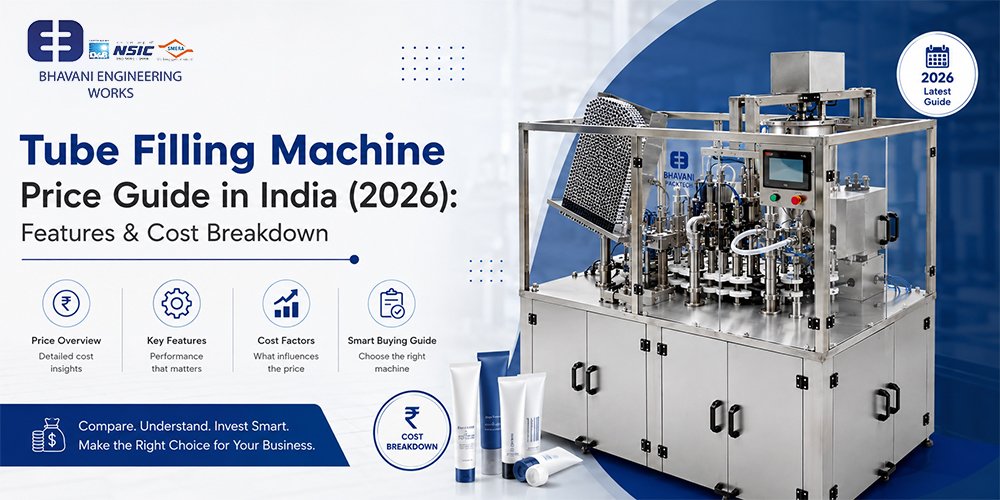
So, you’re curious about how much a tube filling machine costs in India for 2026? It’s not a one-size-fits-all answer, as prices can jump around quite a bit. However, to give you a ballpark figure, expect to invest anywhere from ₹2.5 Lakhs for simpler semi-automatic models to ₹20 Lakhs and upwards for high-speed, fully automatic, and specialized machines. This guide will break down what influences these costs and what you should be looking for.
Understanding the Tube Filling Machine Market in India
The Indian market for tube filling machines is quite dynamic. Driven by the booming pharmaceutical, cosmetic, food, and chemical industries, there’s a consistent demand for these machines. As of 2026, the market is characterized by a mix of domestic manufacturers offering competitive pricing and international brands known for advanced technology. You’ll find everything from basic, entry-level machines suitable for small businesses to sophisticated, integrated systems designed for large-scale manufacturing. The growth is further fueled by increasing automation trends and the government’s ‘Make in India’ initiative, which encourages local production and innovation. Competition is healthy, meaning you have a good range of options to explore, which is great for finding a machine that fits your specific needs and budget.
Growth Drivers
Several factors are pushing the growth of the tube filling machine sector in India. The expanding pharmaceutical sector, with its increasing production of ointments, creams, and gels, is a major contributor. Similarly, the burgeoning cosmetic industry, a significant consumer of tube-packaged products like toothpaste, face creams, and hair dyes, adds to the demand. Even the food industry, with products like ketchup and sauces often packed in tubes, plays a role. Overall, the general increase in packaged goods and consumer demand for convenience in India means these machines are becoming more essential for businesses across sectors.
Key Industry Sectors
- Pharmaceuticals: This remains a cornerstone, with strict quality and hygiene requirements.
- Cosmetics & Personal Care: A massive market for tube-filled products, from daily essentials to luxury items.
- Food & Beverage: Growing in popularity for specific product types.
- Chemicals & Adhesives: Used for packaging specialized products.
Key Features to Consider When Purchasing a Tube Filling Machine
When you’re on the hunt for a tube filling machine, it’s easy to get lost in the specs. But focusing on a few key features will help you narrow down your choices and ensure you get a machine that actually works for you. Think about what you’re filling, the type of tubes you use, and how much you need to produce. These practical considerations are where the real value lies.
Machine Speed and Output
This is often one of the first things people look at. How many tubes can the machine fill per minute or hour? This directly impacts your production capacity and how quickly you can scale. For a small operation, a slower machine might be perfectly fine, but if you’re looking to ramp up production, you’ll need something that can keep pace.
Filling Accuracy and Precision
No one wants to buy products that are inconsistently filled. You need a machine that dispenses the exact amount of product every time. This not only ensures customer satisfaction but also helps control your raw material costs by minimizing overfilling. Look for machines with volumetric or gravimetric filling systems, depending on the product’s viscosity and your specific needs.
Material Compatibility
The material your tubes are made of and the product you’re filling will dictate certain machine requirements. Some machines are better suited for plastic tubes, others for metal tubes, and some can handle both. The type of product – whether it’s a thick paste, a liquid, or a semi-solid – will also influence the filling mechanism and any required heating or cooling systems.
Automation Level
Are you looking for something you manually feed tubes into, or a system that handles the entire process from tube feeding to sealing and packaging?
- Semi-Automatic: You might manually place tubes, but the machine handles filling and sealing.
- Fully Automatic: The machine does everything, requiring minimal human intervention once set up. This is ideal for high-volume production.
Ease of Operation and Maintenance
A machine that’s overly complicated to operate or clean will slow down your production and increase your labor costs. Look for intuitive controls, easy-to-access components for cleaning, and straightforward maintenance procedures. User-friendliness is key to smooth operations.
Cost Breakdown: Factors Affecting Tube Filling Machine Prices in India
The price tag on a tube filling machine isn’t just a random number; it’s a reflection of several underlying factors. Understanding these elements will help you grasp why one machine costs significantly more than another and where your investment is going. It’s about getting the most value for your money, not just the cheapest option.
Machine Type and Complexity
This is perhaps the biggest determinant. A basic semi-automatic machine that fills a single tube at a time will naturally be much cheaper than a high-speed, multi-head, fully automatic machine with advanced features. The more functions the machine performs and the more sophisticated its technology, the higher the price point.
Automation Level
As mentioned earlier, the degree of automation plays a huge role. Fully automatic machines, with their integrated systems for tube feeding, filling, sealing, and even coding, come with a premium price tag compared to their semi-automatic counterparts. The investment in complex robotics and control systems drives this cost up.
Brand and Manufacturer Reputation
Renowned brands that have a long-standing reputation for quality, reliability, and excellent after-sales service often command higher prices. This is typical across industries – you often pay a bit more for the peace of mind that comes with a trusted name. Domestic manufacturers in India are increasingly producing high-quality machines at competitive prices, offering a strong alternative to international brands.
Capacity and Speed
Machines designed for higher production output and faster speeds are generally more expensive. They require more robust components, more powerful motors, and more sophisticated control systems to handle the increased throughput reliably. If your production needs are modest, you might find a slower, less expensive machine perfectly adequate.
Material of Construction and Build Quality
The materials used in constructing the machine – like stainless steel grades (e.g., SS304, SS316) for contact parts, especially crucial for pharmaceutical and food applications – can significantly impact the price. Higher quality materials, better finishes, and overall robust build quality contribute to durability, hygiene, and longevity, and thus, a higher initial cost.
Additional Features and Customization
Many manufacturers offer optional add-ons and customization services. This could include features like:
- Coding and Marking Systems: For batch numbers, expiry dates.
- Tube Inspection Systems: To ensure correct placement and sealing.
- Specialized Filling Heads: For viscous or sticky products.
- Integrated Cleaning-in-Place (CIP) Systems: For easier sanitation.
The more specialized features you require, the more the price will increase. Standard models are usually more budget-friendly than custom-built solutions.
Comparing Different Types of Tube Filling Machines Available in India
Type of Tube Filling Machine | Speed (tubes per minute) | Filling Accuracy | Applicability |
Automatic Tube Filling Machine | 60-120 | High | Pharmaceuticals, Cosmetics, Food |
Semi-Automatic Tube Filling Machine | 30-60 | Medium | Pharmaceuticals, Cosmetics |
Manual Tube Filling Machine | 10-30 | Low | Small-scale Production, Artisanal Products |
When you’re looking at tube filling machines in India, you’ll notice a few distinct categories. Each type is designed with different production needs and product types in mind. Choosing the right one depends heavily on what you’re trying to achieve with your packaging process.
Semi-Automatic Tube Filling Machines
These are great for smaller businesses or those with moderate production volumes. You’ll typically need to manually place each tube into the machine, and then the machine will perform the filling and sealing operation automatically. They are generally less expensive and simpler to operate and maintain, making them a good entry-level option.
Key Characteristics
- Manual Tube Loading: Requires operator assistance for tube placement.
- Automated Filling & Sealing: The machine handles the core operations.
- Lower Production Speed: Compared to automatic models.
- Cost-Effective: Generally the most affordable option.
Fully Automatic Tube Filling Machines
These are the workhorses for industries with high production demands. Everything from feeding empty tubes, filling them with product, sealing them securely, and often even ejecting them for further processing is handled automatically. They offer significant efficiency gains but come with a higher initial investment.
Key Characteristics
- Automated Operations: Tube feeding, filling, sealing, and more.
- High Production Speed: Designed for large-scale output.
- Reduced Labor Costs: Requires less manual intervention.
- Higher Initial Investment: Due to advanced technology and complexity.
Specialized Machines (e.g., for Hot Fill or Specific Products)
Beyond the basic automatic and semi-automatic variants, there are machines designed for very specific applications. This can include machines engineered to handle products that need to be filled at high temperatures (hot fill), or those specifically designed for very viscous or unusual products. These often incorporate specialized heating, cooling, or dispensing mechanisms.
Key Characteristics
- Tailored for Specific Needs: Such as high-temperature products or unique viscosities.
- Complex Mechanisms: May include heating, cooling, or advanced dispensing systems.
- Higher Price Point: Due to specialized engineering and components.
Understanding the Importance of Quality Control in Tube Filling Machines
It’s not just about getting the product into the tube; it’s about doing it consistently, safely, and efficiently. Quality control in tube filling machines directly impacts your product’s integrity, your brand’s reputation, and your bottom line. Think of it as an investment in preventing problems before they happen.
Product Integrity and Consistency
A well-controlled filling process ensures that every tube contains the precise amount of product. This prevents underfilled tubes, which can lead to customer complaints, and overfilled tubes, which waste valuable product and increase costs. Consistent filling also means the product performs as intended, whether it’s a medication, a cosmetic, or food item.
Hygiene and Safety Standards
Especially in pharmaceutical and food industries, hygiene is paramount. Machines with features like easy-to-clean surfaces (often stainless steel), minimal crevices where product can accumulate, and designs that facilitate thorough sanitization are crucial. Quality control here means preventing contamination and ensuring the final product is safe for consumption or use.
Machine Reliability and Durability
A machine that’s built with quality components and designed for robustness will operate reliably over the long term. This means fewer breakdowns, less downtime, and therefore, higher productivity. Regular maintenance and quality checks on the machine itself contribute to its longevity and consistent performance, saving you money on repairs and lost production hours.
Compliance with Regulations
Many industries have strict regulatory requirements regarding packaging and filling. A quality-controlled tube filling machine helps ensure that your packaging processes meet these standards. This can include accuracy in fill volumes, proper sealing to prevent leakage, and traceability of materials and processes.
Tips for Selecting the Right Tube Filling Machine for Your Production Needs
Choosing the right tube filling machine can feel like a big decision, and it is! It’s an investment that will be a part of your production line for years. The trick is to go in with a clear understanding of what you actually need, rather than getting swayed by bells and whistles you won’t use.
Assess Your Product Type and Viscosity
This is step one. Is your product a thick cream, a smooth ointment, a liquid, or a gel? Different products require different filling mechanisms. A machine designed for a low-viscosity liquid won’t handle a high-viscosity paste effectively, and vice-versa. Some machines are highly adjustable, while others are optimized for a specific range.
Determine Your Required Output Volume
Honestly assess how many tubes you need to fill per day, week, or month. Are you a small startup needing a few hundred tubes daily, or a large manufacturer churning out thousands? This will dictate whether a semi-automatic machine will suffice or if you absolutely need a high-speed automatic system. Don’t overbuy if you don’t need the capacity, but don’t underbuy if you plan to scale.
Consider Your Tube Specifications
What size and type of tubes will you be using? Are they plastic or metal? What is the diameter and length? The machine needs to be compatible with your chosen tube packaging. Some machines can handle a range of tube sizes, while others are set up for specific dimensions and may require adjustments or change parts for different sizes.
Evaluate Space and Utility Requirements
Think about where the machine will live in your facility. Do you have enough space for the footprint of the machine, plus adequate clearance for operation and maintenance? Also, check the power requirements – does your existing electrical setup support the machine’s needs? Some machines also require compressed air.
Factor in Budget and Total Cost of Ownership
While the initial purchase price is a big part of the equation, don’t forget the ongoing costs. Think about maintenance, spare parts, energy consumption, and any consumables. Also, consider the potential for downtime if the machine is unreliable. A slightly more expensive but more reliable machine might have a lower total cost of ownership over its lifespan.
Look at After-Sales Service and Support
When something goes wrong, you want to know you can get help quickly. Investigate the manufacturer’s or supplier’s reputation for after-sales service, technical support, and availability of spare parts. A good support system can save you a lot of headaches and prevent costly production interruptions.
Future Trends and Innovations in Tube Filling Machine Technology in India
The world of manufacturing technology is always evolving, and tube filling machines are no exception. Looking ahead to 2026 and beyond, you can expect to see some exciting advancements that will make these machines even more efficient, intelligent, and user-friendly. Embracing these innovations can give you a competitive edge.
Increased Automation and Robotics Integration
We’re already seeing a move towards greater automation, and this will only intensify. We can expect more sophisticated robotic arms for handling tubes, integrated vision systems for quality checks, and smarter control software that allows for greater customization and remote monitoring. The goal is to minimize human touchpoints and maximize efficiency.
Smart Manufacturing (Industry 4.0) Capabilities
Tube filling machines are becoming more connected. Think of machines that can communicate with other parts of your production line, collect vast amounts of data on performance, and even predict potential maintenance needs before a breakdown occurs. This allows for more proactive management and optimization of the entire manufacturing process.
Enhanced Precision and Fill Accuracy
Innovations in sensor technology and dispensing systems will continue to push the boundaries of fill accuracy. This is crucial for industries like pharmaceuticals where exact dosing is vital. Expect even finer control over filling volumes, reducing product waste and improving product consistency.
Focus on Energy Efficiency and Sustainability
As environmental concerns grow, manufacturers are looking for ways to make their machines more energy-efficient. This could involve using more advanced motors, optimizing power consumption during operation, and designing machines that require less maintenance and have longer lifespans, thus reducing waste.
User-Friendly Interfaces and Data Analytics
The human-machine interface (HMI) is becoming more intuitive. Expect touchscreens with simpler controls, clearer diagnostics, and sophisticated data analytics that can provide valuable insights into your production performance. This makes operation and troubleshooting easier for your staff.
FAQs
Q1. What are the key features to consider when purchasing a tube filling machine in India?ss
Consider production capacity, tube compatibility, filling accuracy, automation level (manual, semi-automatic, or automatic), sealing quality, stainless steel construction, ease of operation, and after-sales support.
Q2. What factors affect tube filling machine prices in India?
The price depends on the machine’s automation level, production capacity, filling accuracy, tube type compatibility, build quality, control system, customization, and brand reputation.
Q3. What are the different types of tube filling machines available in India?
The main types are manual, semi-automatic, fully automatic, rotary, and linear tube filling machines. Manual machines are the most affordable, while fully automatic and rotary machines offer higher speed and efficiency at a higher cost.
Q4. Why is quality control important in tube filling machines?
Quality control ensures accurate filling, leak-proof sealing, reduced product wastage, consistent packaging, and compliance with industry standards. Choose a machine that matches your production needs and offers reliable performance.
Q5. What are the future trends in tube filling machine technology in India?
Future trends include smart automation, IoT-enabled monitoring, servo-driven filling systems, AI-based quality inspection, energy-efficient designs, and machines compatible with eco-friendly packaging materials.
Category