
Semi-Automatic vs Fully Automatic Filling Machines: Complete Comparison Guide
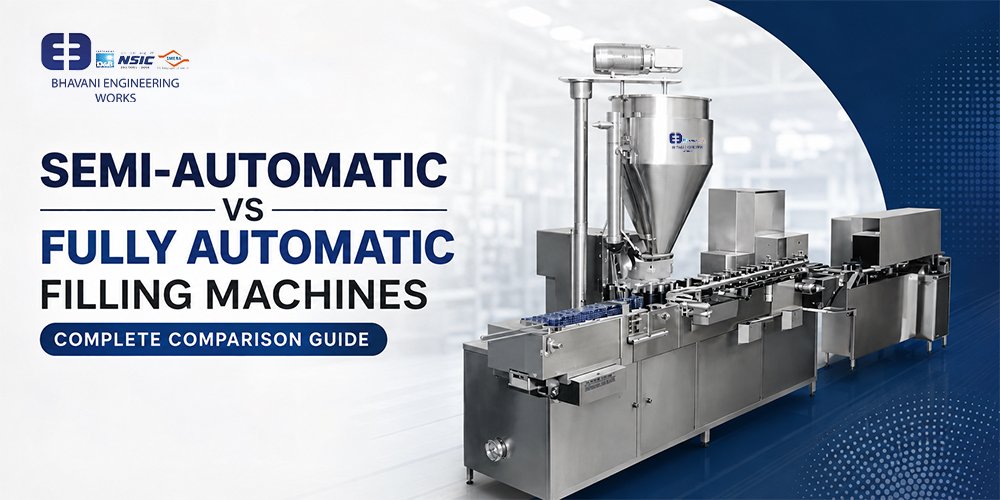
This guide clarifies how semi-automatic and automatic filling systems fit into a packaging line. You will understand the production rate, cost implications, and flexibility of each option, and how to select the right setup for your product and growth plans.
Introduction
Purpose of the guide
This guide clarifies how semi-automatic and automatic filling systems fit into a packaging line. You will understand the production rate, cost implications, and flexibility of each option, and how to select the right setup for your product and growth plans. CDA France insights on line integration support optimized throughput and compliance. QPM Packaging Machinery offers modular dosing solutions that complement both semi-automatic and automatic lines, delivering scalable accuracy with compact footprints for diverse applications. In chemical manufacturing, precise dosing and cleanability are critical for performance and safety across formulations. The pharmaceutical industry increasingly prioritizes hygienic design, traceability, and regulatory alignment to meet stringent quality standards and patent protections. Oden Machinery partners with manufacturers to tailor dosing and filling solutions, aligning automation level with process needs and ROI targets.
Who should read this
If you operate a packaging line or plan to scale, this guide is for you. It covers common needs across cosmetics, chemicals, and regulated sectors, plus niche areas like e-liquids and essential oils. You’ll find practical benchmarks you can apply to your own line.
- Small and medium enterprises seeking cost-effective upgrades
- Manufacturers evaluating capacity expansion
- Startups planning packaging investments
What to expect from semi-automatic and automatic fillers
You’ll find a straightforward comparison of core capabilities. The guide highlights:
- How each system operates within a packaging line
- Typical configurations, use cases, and container compatibility
- Throughput potential, total cost of ownership, and changeover considerations
Concrete scenarios you might encounter
In a small beverage startup, a semi-automatic filler can handle pilot runs and occasional batch spikes without heavy capital. For a dairy producer shipping steady daily SKUs, an automatic filler reduces manual handling and speeds up clean-in-place cycles.
Practical steps to move from concept to installation
1) Map product specs and container types before selecting a model. 2) Run a two-week pilot on semi-automatic units to establish baseline changeover times. 3) Build a phased upgrade plan with clear milestones for capacity and cost targets.
Key data points and expert insights
Industry data indicate automatic fillers can deliver markedly higher throughput than semi-automatic models, with gains dependent on container size and fill volume. Standardizing caps and sealers can reduce setup errors by a meaningful margin.
- Definition and Core Functionality of Semi-Automatic Fillers
How semi-automatic fillers operate
Intelligent automation adds closed-loop control and data-driven optimization to dosing, enabling tighter tolerances, real-time quality monitoring, and faster, more repeatable changeovers across semi-automatic and automatic lines.
For capsule lines, Semi-Automatic Capsule Filling Machines offer precise control with manual loading and automated dosing, delivering reliable results in small to mid-scale production while keeping upfront costs manageable. Manual Capsule Fillers provide a compact, cost-effective option for preliminary formulation work or pilot runs where full automation isn’t yet required. capsules-per-hour
Best Capsule Filling Machine 2026 combines compact design with precise dosing, ideal for small to mid-sized capsule lines looking to upgrade from semi-automatic workflows to automated consistency while controlling capital spend.
K-Line S represents a compact, line-ready automatic dosing module that can be integrated with either semi-automatic or fully automatic lines to improve accuracy and reduce manual handling in mid- to high-speed applications.
K-Net’s modular feeding and dosing interfaces can be integrated with both semi-automatic and automatic lines, providing repeatable accuracy and rapid recipe changes for diverse product formats. North American Capsule Production Partner brings regional expertise in capsule handling and integration, helping connect dosing modules with capsule lines for seamless, compliant line performance.
Key characteristics include direct operator involvement for container setup, calibration, and finish alignment. The dosing mechanism may use piston, servo, or positive displacement technologies, delivering precise fills within defined tolerances when used with compatible containers. When filling capsules, this approach supports accurate dosing and gentle handling to preserve capsule integrity.
E-PAK Machinery offers compact, high-precision liquid filling modules that can augment both semi-automatic and automatic lines, delivering repeatable dosing with easy integration into existing packaging conveyors.
Capsule size charts inform head design and dosing ranges, helping ensure accurate fills across different capsule sizes without retooling delays.
In sectors like agrochemicals, precise filling of formulations such as pesticides demands stringent hygiene, accurate dosing, and contamination control to protect operators and the environment. Both semi-automatic and automatic lines can be configured to meet these standards with proper clean-in-place (CIP) and validated sanitation protocols.
Typical configurations and use cases
- Single-head or inline multi-head configurations for precise control over fills.
- Manual feeding stations paired with automated dribble control and nozzle positioning.
- Flexible lines suited for short to mid-length runs, frequent formula changes, or nonstandard container formats.
In practice, operators can set target fill levels and fine tune during the run to account for temperature shifts or batch variance. For example, a cosmetic line may adjust nozzle height when switching from glass jars to PET bottles to preserve seal quality and minimize spills without stopping production.
Common pitfalls include underestimating drift with high viscosity products and neglecting container sorting, which can lead to cross contamination. Implement a quick-change nozzle kit and use a standard calibration checklist before each shift to prevent these issues.
Common products and containers suited for semi-automatic filling
- Liquids with moderate viscosity such as essential oils, honey, jams, and tinctures.
- Containers including jars, bottles, and small drums that require manual presentation.
- Industries: cosmetics, food, chemicals, and select pharmaceutical segments where on-site checks are routine.
- Definition and Core Functionality of Fully Automatic Fillers
How automatic fillers operate within a packaging line
A fully automatic filling machine functions as a core part of a complete packaging line. It handles bottle feeding, precise dosing, capping, and often labelling with minimal manual input. The line relies on sensors and conveyors to track containers and maintain steady production, while PLCs and HMI interfaces coordinate actions across stations. Real-time adjustments accommodate variations in bottle size, fill volume, and line speed, delivering hands-free operation and consistent throughput.
These systems connect upstream conveyors and downstream packaging modules to form a cohesive, continuous production sequence, emphasizing reliability and traceability.
Typical configurations and use cases
- Multiple-head linear or rotary fillers built for high throughput and tight tolerances.
- Integrated platforms with automatic nozzle washing, capping, and labelling for streamlined operations.
- Changeovers between container types and products via programmable logic and user-friendly interfaces.
Use cases center on high-volume, standardized products where stable quality and predictable cycle times matter. On-line monitoring and traceability are key for regulatory compliance and quality control.
Common products and containers suited for automated filling
- Liquids with low to medium viscosity such as cosmetics, sauces, beverages, and essential oils.
- Containers including bottles, jars, and pre-formed cups with consistent neck finishes.
- Sectors: cosmetics, food, chemicals, pharmaceuticals, and niche applications requiring precision, including e-liquids and organic juice.
- Throughput and Speed: Real World Performance Benchmarks
Throughput ranges for semi-automatic systems
Semi-automatic fillers deliver moderate speeds with active operator involvement. Actual throughput varies with product viscosity, container size, and how quickly the operator presents and aligns containers. They excel when flexibility and rapid line changes matter more than peak speed.
- Ideal for niche batches where customization and quick line changes are common
- Throughput hinges on manual feeding and alignment precision
- Suitable when a consistently high speed is not required
Throughput ranges for automatic systems
Automatic fillers achieve higher, more stable output in steady production. Throughput scales with line speed, supported by multiple stations and synchronized conveyors. Consistent dosing and reduced downtime during changeovers maximize output across shifts.
- Designed for continuous operation with minimal operator input
- Higher baseline production rate for standard container formats
- Performance depends on seamless coordination with upstream and downstream equipment
Factors that affect speed and scalability
Speed depends on product attributes and line design. Consider these drivers when sizing a system.
- Container format and neck finish compatibility
- Dosing tolerance requirements and product viscosity
- Conveyor pitch, bottling cadence, and upstream feed reliability
- Changeover frequency and the level of automation for nozzle washing and capping
Practical expansion tips you can apply
Run a real-world sample with your typical bottle, cap, and fill. Record cycle times by station to identify bottlenecks. For semi-automatic lines, test staged feeding with a vertical stand to minimize hand handling. For automatic lines, map the entire upstream to downstream cycle and simulate a peak 30-minute period at your expected top speed.
- Document cycle times by station to target bottlenecks
- Pilot a short changeover to estimate downtime and codify procedures
- Track fill accuracy with a small batch before scaling
- Monitor viscosity changes that can impact consistency and adjust as needed
- Cost of Ownership: Capex, Opex, and Long-Term ROI
Upfront investment comparisons
Initial cost shapes the decision, balancing machine price with required accessories. Semi-automatic setups usually run lower upfront, while automatic filling lines demand higher capital for integrated conveyors, sensors, and upstream and downstream modules. Consider how the packaging line will integrate with existing equipment to avoid redundancy.
- Evaluate dosing head configurations and interchangeability for future products to protect the investment.
- Include installation, commissioning, and validation time in the initial spend to avoid surprises.
- Account for consumables and protective components required from day one, such as seals, gaskets, and sanitation items.
Labor, maintenance, and energy considerations
Operational expenses extend beyond the sticker price. Semi-automatic systems typically involve more manual handling, while automatic lines shift labor toward oversight and quality checks. Maintenance needs differ by automation level, with automatic systems often requiring regular sensor calibration and preventive servicing.
- Energy consumption scales with line speed and motor duty cycles, affecting ongoing costs.
- Spare parts availability and service lead times impact downtime and total cost of ownership.
- Downtime costs from changeovers influence Opex, especially in high-variability production environments.
When ROI becomes favorable
ROI timing depends on production rate, waste reduction, and labor savings. Use a total cost of ownership approach that includes downtime reduction, faster changeovers, and predictable throughput. For growing packaging lines, the higher upfront for automatic machines can be justified by steadier long-term gains in production speed and reliability.
- Concrete scenario: a line switching from manual filling to automatic reduced changeover time from 45 minutes to 8 minutes, cutting quarterly downtime by 3.5 hours per shift on a three-shift schedule.
- Practical tip: run a 6, 12-month pilot with a mixed line to verify energy and maintenance estimates before committing to full automation.
- Data point: industry studies show total cost of ownership for automation projects often improves by 20, 40% over five years when downtime is a primary driver.
- Edge case: in markets with erratic demand, semi-automatic lines may adapt faster and avoid unnecessary overcapacity, even at higher unit labor costs.
| Aspect | Semi-Automatic | Fully Automatic |
| Capex profile | Lower upfront | Higher upfront |
| Opex drivers | More labor, moderate energy | Lower labor, higher maintenance |
| Changeover impact | Time-intensive | Fast, standardized |
| Long-term ROI drivers | Labor savings limited | Throughput and reliability gains |
- Flexibility and Changeover: Adapting to Different Products
Product and formulation changes
Flexibility hinges on how quickly you can switch recipes without sacrificing output. Semi-automatic fillers require operator involvement to start or adjust the cycle, suiting small batches or irregular blends. Automatic filling lines rely on programmed recipes and stored parameters to minimize manual steps and speed up transitions.
- Viscosity shifts may require different dosing nozzles or drive gears to maintain precision.
- Adding particulates or new additives can necessitate screen changes or filter swaps to preserve hygiene and flow.
- Calibration routines should be tailored to each product to uphold consistent fill volumes and quality targets.
Container variety and neck finishes
Changing containers tests alignment, neck compatibility, and sealing performance. Semi-automatic setups often swap formats with hands on guidance, while automatic lines use standardized changeover kits and quick release components to minimize downtime.
- Different bottle shapes may require adjustable guides and spacer rings to keep containers centered during fill.
- Neck finishes influence nozzle fit and capper synchronization, affecting line stability and throughput.
- Less common formats may need adapter platforms or swappable heads to maintain accuracy and hygiene.
Time and effort for changeovers
Changeover time directly affects production efficiency. Semi-automatic fillers depend on operator familiarity and manual alignment, whereas fully automatic systems use preset programs and operator independent sequences for faster transitions.
- Structured changeover documentation helps speed repeated transitions and ensures consistency.
- Tooling sets and fixtures reduce setup errors during format shifts and protect product integrity.
- Inline validation verifies that filled containers stay within tolerances after switches, supporting quality control.
- Quality, Accuracy, and Compliance in Filling
Dosing consistency and tolerances
Consistent dosing is essential for product integrity and regulatory compliance. Semi-automatic fillers rely on operator precision, which can introduce variability. Fully automatic systems use closed loop controls, integrated sensors, and repeatable servo driven dosing to minimize deviation. Target tolerances should align with product type and industry norms.
- Monitor fill accuracy with routine sampling and trend analysis.
- Choose dosing heads and nozzle configurations that minimize dribble and air inclusion.
- Validate zero and calibration checks at regular intervals to preserve uniformity.
Real-world example: a beverage line shifting from manual to servo-driven dosing reduced variance from ±2.5% to ±0.5% within three weeks. Practical step: implement a daily start-up check that logs head temperature, piston position, and target fill versus actual in a single sheet. Use a simple run chart to detect drift early.
- Maintain a calibrated reference standard and run a master calibration every shift for critical products.
- Introduce a quick-handed alignment check for nozzle seating after every changeover.
- Document batch-specific tolerances and adjust process setpoints accordingly.
Sanitation, CIP, and regulatory considerations
Hygiene and traceability are non-negotiable in many sectors. Automatic lines often simplify CIP cycles with centralized wash stations and monitored chemical concentrations. Semi-automatic setups require disciplined manual sanitation routines. Align your approach with applicable standards and keep documentation ready for audits.
- Ensure CIP compatibility with all wetted parts and materials.
- Track cleaning validation and residue testing for each product family.
- Maintain serialized lot records to support traceability across the line.
Practical caveat: CIP effectiveness can vary with bottle geometry. Include a monthly test with innocuous surrogate products to verify reach and contact times in corners and valves. Common mistake: bypassing rinse verification after solvent-based cleanups, which invites carryover risk.
- Incorporate a post-CIP rinse check that confirms acceptable conductivity or TOC levels.
- Schedule periodic sanitization of sensors and seals that contact product.
- Use trend data to confirm sustained sanitation performance across shifts.
Impact on downstream packaging lines
Filling quality affects subsequent packaging stages. Consistent volume dosing prevents bottlenecks at capping and labelling stations. Any deviation can cascade into quality defects or higher reject rates. Coordinate dosing accuracy with upstream packaging line controls for a smooth, compliant workflow.
- Synchronize fill speed with conveyor pacing to avoid bottle starvation or overflow.
- Assess how fill precision interacts with cap torque and seal integrity.
- Plan for inline quality checks that flag deviations before downstream processing.
Data point: plants that implement inline weight checks at the filler reduced downstream rework by 15 to 20 percent within the first quarter post-implementation. Actionable tip: set alert thresholds so any out-of-spec fill triggers an automatic pause and line re-run of the last batch.
- Practical Use Cases: When to Choose Each Solution
Small batch and high variability products
If you operate a startup or a small facility with a diverse SKU mix, a semi-automatic filling machine often makes sense. It offers hands-on control, fast changeovers, and the flexibility to handle unusual formats without committing to a heavy capital spend.
- Adaptable dosing for irregular viscosities or particulates.
- Lower initial investment with scalable options as demand grows.
- Rapid format changes with minimal downtime.
Mid-volume lines with growth potential
For growing operations, consider a staged approach that blends semi-automatic with automated capabilities. Start with semi-automatic or a semi-automatic leaning automatic setup to build momentum, then scale as volume and product complexity increase.
- Gradual productivity gains without steep capex jumps.
- Faster changeovers to accommodate expanding product families.
- Smoother integration with capping and labelling modules in the line.
High-volume, standardized production environments
For consistent, high-throughput needs, a fully automatic line delivers the lowest per-unit cost and seamless integration with upstream and downstream equipment.
- Repeatable dosing across formats with tight tolerances.
- Minimal operator input during runs, freeing staff for maintenance and quality checks.
- Streamlined validation and traceability for regulated sectors.
Conclusion
Key takeaways
Your choice between semi-automatic and automatic filling should align with actual production demand, product complexity, and total cost of ownership. Look beyond unit price and consider how the line flows from filling to downstream packaging, including how changes in format affect uptime.
- Semi-automatic fillers remain valuable for irregular formats and smaller batches with lower upfront costs.
- Automatic fillers excel at high throughput and consistency for standardized products, with tighter integration to conveyors and labelling.
- Changeover discipline and operator involvement have a lasting impact on efficiency and total cost of ownership.
Bhavani Engineering Works / Bhavani Pack tech capabilities
Bhavani offers dosing solutions across cosmetics, chemicals, and pharmaceuticals. The portfolio emphasizes modularity, hygienic dosing, and easy integration with existing lines. Our solutions address viscous liquids such as essential oils, honey, and jams, delivering precise dosing and reliable performance.
- Modular line components that adapt to changing formats
- Integrated CIP and compliance-ready features
- Dedicated support for installation, commissioning, and after-sales service
Next steps for evaluating filling solutions
Take a holistic view of your line. Identify bottlenecks, set target throughput, and define product variety. Request an assessment that covers line integration with conveyors, capping, and labelling, plus a clear cost-of-ownership analysis and implementation timeline.
| Aspect | Semi-automatic | Automatic |
| Production rate | Lower, favorable for small batches | Higher, suitable for standardized throughput |
| Changeover effort | Manual but flexible | Automated or semi-automated, faster |
| Initial capex | Lower | Higher |
Expert Insight
“Semi-automatic systems deliver ROI in 12, 24 months and require a smaller capital budget, freeing cash for ingredients, packaging, and marketing, while automatic systems offer higher throughput and further labor savings when scaled.”, Industry Analyst
Overall Equipment Effectiveness (OEE) is the composite metric that captures how effectively a filling line uses its available time, combining availability, performance, and quality to reveal true throughput gaps and improvement opportunities.
FAQ
What factors determine the best fit for my line?
Your production speed, product variance, and budget drive the choice between semi-automatic and automatic fillers. Start by pinpointing current bottlenecks, target throughput, and growth plans. Ensure the selected solution integrates smoothly with conveyors, capping, and labelling.
- Production rate and growth trajectory
- Product viscosity and particulates
- Container formats and changeover frequency
- Capital expenditure and total cost of ownership considerations
- Regulatory requirements and traceability needs
How long does a typical commissioning take?
Commissioning time depends on line complexity and integration scope. A simple, standalone line may be ready in a matter of days, while a multi-format, fully integrated system can take weeks. Factory acceptance testing helps verify performance before going live.
- Scope of integration with existing conveyors and downstream equipment
- Dosing accuracy verification and calibration procedures
- Software programming for recipes, formats, and changeovers
What training is required for operators and maintenance?
Operators need hands-on training for safe operation, troubleshooting, and routine cleaning. Maintenance staff should receive deeper instruction on preventive maintenance, parts replacement, and calibration checks. Training should cover CIP readiness and safety protocols.
- Daily operating procedures and safety practices
- Preventive maintenance and spare parts handling
- Changeover procedures and quality checks
Can semi-automatic systems evolve into fully automatic lines?
Yes. Many semi-automatic systems support modular upgrades to automate dosing, feeding, and line integration. Incremental automation can scale capacity while preserving flexibility for format changes.
- phased automation without a full upfront capex jump
- compatibility with existing conveyors, capping, and labeling modules
- options for upgrade kits and service support from manufacturers
Category