
How Packaging Automation Improves Product Consistency & Brand Value
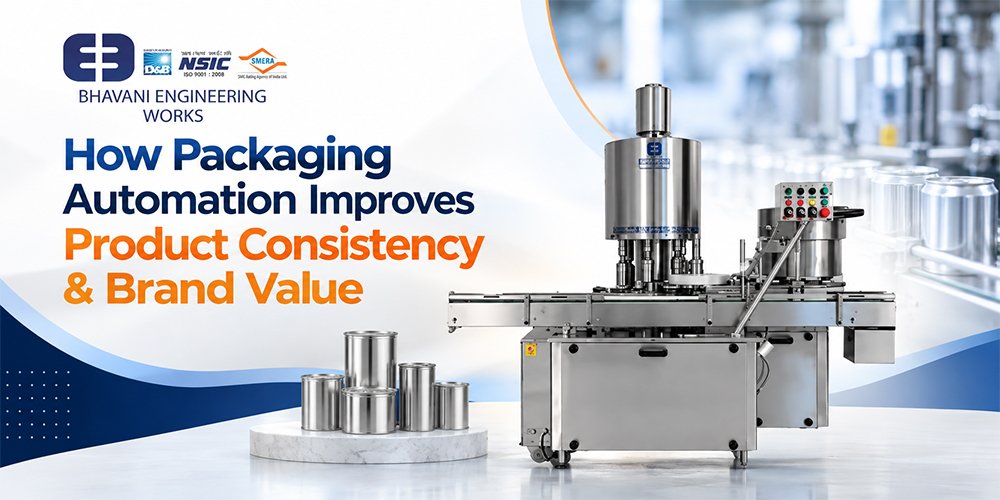
Discover how packaging automation improves product consistency, reduces packaging errors, and strengthens brand value through reliable, uniform presentation.
Introduction
Why consistency and brand value matter in packaging
Future Market Insights notes that packaging automation is increasingly tied to brand value, with predictable packaging quality driving trust and repeat purchases across diverse markets.
Brand value grows as packaging becomes a recognizable touchpoint. Clear branding, intact protection, and predictable delivery reinforce your product story from shelf to customer.
How automation changes the packaging landscape
Automation creates repeatable processes and reduces variation from manual handling. With automated fill, seal, and label steps, you gain consistent results at higher throughput and lower operating costs.
- Throughput gains: faster end‑of‑line packaging with maintained accuracy.
- Labor cost reduction: fewer manual interventions.
- Quality standards: standardized checks catch errors earlier, reducing waste.
Aspect | Manual | Automated |
Consistency | Variable | Repeatable |
Throughput | Lower | Higher |
Labor costs | Higher | Lower |
Predictability as the Core Benefit of Packaging Automation
Understanding repeatable processes and stable output
Automation enforces repeatable cycles across each step, reducing drift and stabilizing output. Standardizing fill, seal, and label tasks minimizes variations between batches and supports consistent quality.
Repeatable processes give operators a trustworthy baseline for daily production planning, with defined parameters guiding routine cycles. pick-and-place robots further enhance accuracy by handling delicate items and tight tolerances across multiple SKUs.
OCME USA brings decades of end-of-line packaging expertise, helping brands achieve repeatable, high-precision carton sealing, labeling, and shrink wrap for consistent output at scale. Doosan Robotics Americas offers collaborative robots that streamline pick-and-place, case packing, and palletizing tasks, enhancing precision and operator safety on packaging lines. Altair Wrap-Around Carton Packer complements these capabilities by handling wrap-around carton formation with tight tolerances, boosting consistency across large SKU mixes. Autonomous Guided Vehicles (AGVs) further strengthen this ecosystem by transporting loaded pallets and cased bundles between work cells, improving flow, reducing manual handling, and sustaining throughput without sacrificing accuracy.
How predictability supports production planning and timelines
- Forecastable throughput: exact pace of each package enables accurate schedules.
- Batch reliability: stable cycle times reduce buffer needs in plans.
- Delivery schedule alignment: stable output helps meet customer deadlines with fewer expeditors.
Achieving Consistent Package Quality
Uniform filling, sealing, and labeling
Automated systems coordinate fill volumes, seal integrity, and label placement with precision. Each package follows the same recipe, ensuring uniform weight, consistent seal strength, and legible, correctly positioned labels across thousands of units. This consistency reduces variance that can trigger returns or complaints at scale.
End-of-line packaging equipment standardizes the final presentation with sealed packaging, tape, or shrink wrap. A uniform finish supports customer trust and aligns with brand expectations from warehouse to doorstep.
Minimizing human variability to reduce rework
Automation lowers the risk of misfeeds, mislabels, and inconsistent fill levels by removing routine manual variations. Operators monitor for exceptions and intervene rapidly, keeping lines aligned with defined parameters.
- Repeatable packaging processes reduce rework and scrap.
- Standardized checks catch defects before packaging completes.
- Consistent packaging integrity minimizes post-packaging adjustments.
Aspect | Manual | Automated |
Filling accuracy | Variable | Consistent |
Seal integrity | Inconsistent | Reliable |
Label placement | Occasional misalignment | Aligned and legible |
Protecting Product Integrity Through Automation
Consistent protective packaging applications
Automation standardizes end-of-line protection, applying sealed packaging, tape, and shrink wrap with precise parameters to shield products in transit. This consistency preserves condition from warehouse to customer.
End-of-line systems deliver uniform cushioning and wrapping around each unit or carton. Consistent protection reduces damage risk and supports a dependable customer experience.
- Controlled cushioning placement
- Uniform wrap tension and coverage
- Standardized sealing integrity across volumes
Reducing damage and recalls with standardized processes
Standardized packaging minimizes variability that can cause damage. Automated checks flag anomalies before boxes leave the line, supporting quality standards and reducing downstream rework.
Reliable automated output lowers the chance of incorrect seals, misfeeds, or improper labeling that could trigger recalls. The result is a more resilient supply chain with fewer disruption points.
Aspect | Manual | Automated |
Protection consistency | Variable | Standardized |
Damage risk | Higher | Lower |
Recall exposure | Greater | Reduced |
Impact on Workforce and Safety
Shifting roles from repetitive tasks to value-added work
Automation redefines operator responsibilities and elevates the work on the line. Staff move from repetitive tasks to monitoring, exception handling, and process optimization. This shift supports skill development and job satisfaction while preserving throughput.
- Roles emphasize system tuning and continuous improvement.
- Operators become diagnostics specialists with rapid response capabilities.
- Cross-training ensures coverage across packaging stages.
Lowering fatigue and injury risk through automation
Reducing manual repetition lessens physical strain. Automated pick-and-place, case handling, and sealing decrease exposure to ergonomic stress along the line.
- Less repetitive motion lowers cumulative fatigue.
- Improved line ergonomics reduce injuries.
- Automation supports safer, more consistent work rhythms.
Aspect | Manual | Automated |
Operator focus | Monotony and vigilance | Monitoring and optimization |
Injury risk | Higher | Lower |
Fatigue | More pronounced | Reduced |
Scaling Brand Value with Consistent Packaging
Maintaining visual and tactile brand cues across volumes
As production scales, your brand cues must stay intact. Automated systems ensure color accuracy, legibility, and precise label placement across both small and large runs.
Repeatable processes deliver consistent carton texture, seal finish, and wrap tension from pilot lines to full production, reinforcing a premium, cohesive feel.
- Standardized color management for prints and inks
- Uniform label geometry and readability at all sizes
- Consistent seal and wrap tension for a premium feel
Building retailer and consumer trust through uniform presentation
Uniform packaging signal’s reliability to retailers and customers. End-of-line systems reproduce exact specifications every cycle, reducing discrepancies that harm brand credibility.
Reliable output supports delivery schedules and aligns with production planning, helping brands meet retailer expectations and customer deadlines with confidence.
- Aligned branding across product families
- Predictable delivery of packaging assets during launches
- Lower risk of order disputes due to packaging variance
Aspect | Manual | Automated |
Brand cue consistency | Variable | Consistent |
Print and label accuracy | Inconsistent | Standardized |
Shelf impact | Unpredictable | Reliable |
Operational Efficiency and Growth
Faster packaging times and higher throughput
Automation accelerates routine tasks, allowing end‑of‑line systems to handle more units per hour without compromising accuracy. The result is faster cycle times and smoother transitions between stages.
- Improved consistency across shifts
- Lower variability in hourly output
- Fewer end‑of‑line bottlenecks
Predictable performance enabling agile scaling
Reliable output from automated equipment supports smarter production planning. When cycles run with repeatable precision, you can adjust volumes up or down to align with schedules and deadlines.
- Throughput alignment with demand forecasts
- Rapid ramp‑ups for product launches
- Quicker reconfiguration with minimal downtime
Metric | Manual | Automated |
Cycle time consistency | Variable | Stable |
Output per hour | Lower | Higher |
Downtime impact | Greater | Reduced |
Implementation Considerations for Packaging Automation
Choosing the right automation solutions for your line
Start by mapping your current end‑of‑line tasks and identifying where variability occurs. This helps determine whether you need case erecting, sealing, labeling, or shrink wrap capabilities. Align equipment with product formats, volumes, and required speed to avoid unnecessary overbuilding.
- Assess throughput targets and select systems that meet or exceed them
- Consider modular options to scale with product mix
- Evaluate integration readiness with existing conveyors and controls
- Prioritize reliability and after‑sales support from manufacturers
Best practices for integration and change management
Plan the transition with uptime in mind to minimize disruption. Coordinate with maintenance and IT early to ensure data capture and remote monitoring are in place.
- Run a phased rollout to validate performance before full deployment
- Map data flows for tracking quality, uptime, and throughput across shifts
- Train operators on new workflows to preserve consistency
- Document standard operating procedures and establish quick escalation paths
Consideration | Impact | Best Practice |
Line compatibility | Smooth integration with current line | Choose modular, scalable solutions |
Downtime risk | Potential production pauses | Phased rollout with validation gates |
Data integration | Real‑time visibility | Ensure IT and controls support |
FAQ
- What is packaging automation, and how does it improve product consistency?
Packaging automation uses automated equipment and robotic systems to perform tasks such as filling, sealing, labeling, packing, and palletizing with minimal manual intervention. By standardizing these processes, automation reduces variations between production runs and helps maintain consistent package quality, presentation, and product protection.
- How does packaging automation contribute to brand value?
Consistent packaging helps maintain important brand elements such as accurate labeling, color consistency, seal quality, and overall presentation. When customers and retailers receive products with a uniform appearance and reliable packaging quality, it can support brand recognition and a consistent customer experience.
- How does automation reduce packaging errors and product damage?
Automated systems use controlled movements, sensors, and standardized operating parameters to reduce common issues such as incorrect filling, mislabelling, poor sealing, and inconsistent wrapping. Inline quality checks can also identify packaging defects before products move to the next stage, helping reduce rework, waste, and potential product damage.
- Can packaging automation improve production efficiency and workforce safety?
Yes. Automated equipment can handle repetitive and physically demanding tasks, allowing operators to focus more on monitoring, quality control, troubleshooting, and process improvement. Automation can also improve production consistency, reduce repetitive manual movements, and support safer working conditions.
- What should manufacturers consider when selecting packaging automation equipment?
Manufacturers should evaluate production volume, product and package formats, required throughput, available floor space, compatibility with existing conveyors and controls, changeover requirements, maintenance needs, and scalability. Selecting equipment that matches current requirements while allowing future expansion can support reliable long-term production performance.
Category