
Festive Season Demand: Scaling Production with High-Speed Packaging Machines
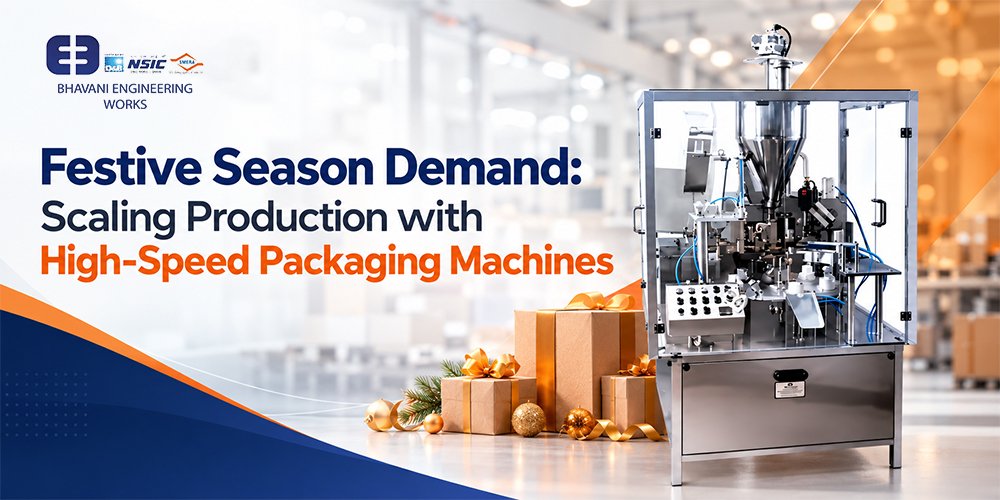
Meet festive season demand with high-speed packaging machines. Explore ways to scale production, reduce bottlenecks, and maintain consistent packaging quality.
Introduction
Understanding Seasonal Demand in Packaging
You face spikes when holidays, promotions, and gifts drive more orders. Seasonal demand tests your capacity planning, forecasting accuracy, and resource allocation without sacrificing quality. Understanding these patterns helps you respond quickly and stay within budget.
Consider variability in order size, SKU mix, and faster packaging cycles. Aligning your process with these realities reduces bottlenecks and keeps delivery promises intact.
Overview of High-Speed Packaging Solutions
High speed packaging machines push throughput beyond standard lines, enabling you to match rapid order cadence. They cover formats from vertical form fill seal systems to horizontal flow wrapping and labeling, scaling output while preserving quality standards.
Look for quick changeovers, reliable weighers and fillers, and integrated sealing and labeling. With strong capacity planning, they form the backbone of a resilient festive season plan.
- Throughput: machines handling elevated units per minute.
- Flex capacity: modular options to add or retract lines as demand shifts.
- Quality controls: real-time checks that keep rejects low during peak speeds.
Note: This section lays the groundwork for selecting machines and strategies that support seasonal demand without overhauling your operation. The goal is predictable performance when volumes rise.
Assessing Peak Capacity Needs
Baseline Capacity and Hidden Losses
Begin with a clear read on your current production rate under typical conditions. Establish the baseline throughput you can sustain without peak demand pressure.
Use OEE to uncover hidden losses across the line. Focus on availability, performance, and quality losses that can widen as speeds rise. A precise tally helps identify fixes before peak periods.
- Document current cycle times for weighers, fillers, and sealing equipment
- Map line downtime and causes to target improvements
- Assess quality rejection rates at standard speeds
Forecasting Seasonal Demand and Throughput Gaps
Build a forecast that ties SKUs, packaging formats, and promotional windows to projected volumes. This forecast should drive capacity planning and resource allocation.
Convert demand into throughput needs by simulating peak periods. Pinpoint gaps between capability and obligation, then map quick wins to close those gaps.
- Integrate seasonal promotions and regional demand shifts into your model
- Incorporate flexible capacity scenarios, including overtime planning and temp labor
- Define real-time KPI triggers to alert when speeds approach limits
Selecting High Speed Packaging Machines for Peaks
Match Production Speeds to Peak Throughput
Define a peak throughput target based on the SKU mix and promotional activity. Align machine classes to that target and avoid bottlenecks or idle capacity. AI-driven analytics can further optimize scheduling and predictive maintenance to sustain peak performance. CPM metrics help quantify capacity utilization and performance in real-time across the line.
HMC Products is a recognized provider of high-speed packaging solutions, with a portfolio that includes advanced form-fill-seal and automated labeling systems designed to meet peak-season throughput and changeover demands.
Adopt modular configurations that scale output without replacing entire lines. Flexible capacity helps manage demand swings while preserving quality. This market momentum supports vendors in the .7 billion U.S. packaging machinery sector, underscoring strong demand for high-speed solutions. The broader market size for high-speed packaging is valued at .2 billion, reflecting rapid expansion and investment in peak-season throughput capabilities.
- Evaluate units per minute for vertical form fill seal and horizontal flow wrapping
- Assess how quickly lines can switch SKUs during a peak
- Balance speed with downstream packing and case packing needs
Key Machine Features for Seasonal Spikes
Prioritize features that enable rapid seasonal response without compromising quality. These options reduce changeover downtime and boost reliability at peak load.
Seek predictable maintenance, simple adjustments, and integrated quality checks that operate at speed.
Flexible Changeover and SKU Management
SMED for Fast Changeovers
Reduce downtime with rapid changeover practices that cut setup time between SKUs. Use single-minute exchanges to shorten changeover windows and keep line uptime during peaks.
Adopt standardized setups and visual work instructions, and run parallel activities that keep the line productive during transitions. This approach helps shifts stay aligned with fast paced festive demand.
- Identify critical swap steps and separate external from internal activities
- Create quick access jigs and tool kits for common SKUs
- Train operators on buffer change steps to avoid bottlenecks
Flexible Packaging Formats and Substrates
Configure lines to handle multiple formats without retooling. Flexible formats and compatible substrates enable rapid SKU transitions while preserving throughput.
Plan substrate compatibility in advance, covering film thickness, sealing temperatures, and labeling variants. This reduces stoppages when seasonal SKUs change.
- Modular die heads and sealing modules for rapid format changes
- Interchangeable guides and spacers to adapt container or pouch sizes
- Standardized substrate handling for consistent feed and minimal jams
Labor Strategies to Support Speed
Flex Labor Models and Overtime Planning
Pair permanent staff with flexible labor pools to absorb demand spikes without lasting headcount changes. Use predictive capacity data to time overtime, protecting uptime while keeping costs in check.
- Cross-trained operators who can move across stations
- Seasonal staffing aligned to the production calendar
Operator Training for Peak Performance
Focus training on speed without sacrificing quality. Prioritize SKUs with the highest turnover and the most complex packaging to build focus area confidence.
Provide ongoing coaching on rapid adjustments and error prevention to minimize stoppages at high speeds.
- Rapid upskilling for new SKUs
- Simulation drills that mimic peak conditions
Quality and Real-Time Monitoring at Speed
Maintaining Quality with Higher Speeds
As throughput climbs, keep quality from slipping. Calibrate equipment at operating speed and embed inline checks that flag anomalies before they escalate.
Real time sensing tracks misfeeds, seal integrity, and label placement, enabling immediate corrective actions downstream.
- SKU‑specific quality thresholds tied to actual line performance
- Inline sampling to detect trends and pre-empt defects
- Automated routing or rejection for out‑of‑spec packs
Real-Time KPIs and OEE Analysis
Live KPI dashboards convert shop floor data into actionable insights. Monitor throughput, scrap, downtime, and quality events as they occur to stay ahead of bottlenecks.
OEE analysis highlights gaps that widen at higher speeds. Use the findings to tighten cycle times, improve availability, and lift quality yield.
KPI | What it Measures | Why It Matters |
Throughput rate | Units produced per hour | Shows actual speed against target |
Quality yield | Good units divided by total units | Direct indicator of packing reliability |
Downtime causes | Root causes of stoppages | Pinpoints improvement focus |
Implementation Roadmap for Seasonal Readiness
Predictive Maintenance and Spare Strategy
Set a maintenance cadence that prevents surprises as speeds rise. Schedule inspections before peak windows and align them with the production calendar to minimize disruption.
Develop a spare parts playbook focused on high impact components like weighing and labeling systems. Prioritize parts with long lead times to avoid last minute stockouts.
- Define critical spares for each packaging line
- Set automated alerts for wear indicators and lubrication needs
- Schedule proactive replacements ahead of demand spikes
Post-Peak Continuous Improvement
After the seasonal surge, close the loop with structured learning. Capture data from throughput, defects, and downtime to drive targeted gains.
Apply findings to tighten SMED, refine SKU transitions, and boost overall equipment effectiveness for the next cycle.
- Document lessons learned by SKU and line
- Prioritize improvements with the highest OEE impact
- Update the capacity model for the next peak
Area | Action | Expected Outcome |
Predictive maintenance | Pre-peak inspections, spare part readiness | Reduced unplanned downtime |
Spare strategy | Critical part stock aligned to line risk | Faster recovery from minor faults |
Post-peak improvements | Capture data, implement SMED and OEE tweaks | Higher readiness for next peak |
FAQs
- What is predictive capacity planning, and why is it important during the festive season?
Predictive capacity planning uses historical production data, demand forecasts, order patterns, and market signals to estimate future production requirements. It helps manufacturers plan equipment capacity, labor, materials, and production schedules in advance, reducing the risk of bottlenecks and missed delivery deadlines during seasonal peaks.
- How can high-speed packaging machines help manage festive season demand?
High-speed packaging machines increase production throughput, allowing manufacturers to process higher order volumes within shorter timeframes. Systems such as vertical form-fill-seal machines, horizontal flow wrappers, automated fillers, weighers, and labeling equipment can help maintain consistent output while meeting quality requirements during peak periods.
- How do SMED techniques reduce packaging machine changeover time?
SMED (Single-Minute Exchange of Die) reduces changeover time by separating internal setup activities from external activities, preparing tools and materials in advance, and standardizing machine adjustments. This allows operators to switch between SKUs faster and improves line availability during periods of high demand.
- Which packaging formats are suitable for seasonal production spikes?
Flexible packaging formats such as vertical form-fill-seal (VFFS) and horizontal flow wrapping systems are commonly used for high-volume production because they can accommodate multiple product sizes and packaging formats. The right solution depends on the product, package dimensions, material, required throughput, and SKU mix.
- How can manufacturers maintain packaging quality at higher production speeds?
Quality can be maintained by calibrating equipment at operating speeds, using inline inspection systems, monitoring seal integrity and label placement, and establishing SKU-specific quality limits. Real-time monitoring can identify defects or process deviations early, allowing operators to make corrective adjustments before large quantities of products are affected.
Category