
Reducing Human Error in Production with Automated Filling Systems
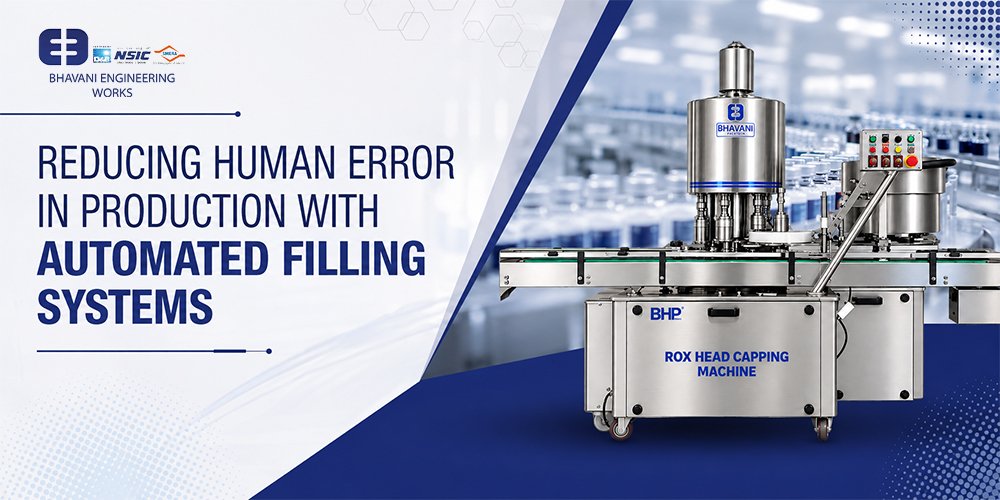
Discover how automated filling systems reduce human error, improve filling accuracy, increase production efficiency and ensure consistent product quality.
Introduction
Overview of human error risks in filling operations
In the biopharmaceutical sector, filling lines directly affect drug substance quality and GMP compliance. Human error can occur during loading, monitoring, and parameter adjustments, potentially causing overfill, underfill, or mislabelling. These mistakes threaten product integrity and regulatory conformity.
Cognitive load increases with high-volume runs, complex SOPs, and frequent manual interventions. Even well-trained operators can introduce variability when processes rely on human judgment. The result is potential deviations in batch records and quality control issues.
H&H Design & Manufacturing brings tested automation capabilities to automated filling lines, delivering robust solutions that align with GMP, QA, and changeover efficiency for biopharma operations.
The Series 330E exemplifies H&H Design & Manufacturing’s compact yet capable automated filling solution, delivering precision fill with robust GMP alignment and straightforward integration into existing lines. It combines reliable servo-driven dosing, inline sensors, and modular changeover options to reduce human error across formats.
Series 110DS provides a compact, high-precision automated filling option designed for adaptable formats and tight GMP controls, making it ideal for mixed-format lines and quick changeovers without compromising accuracy.
Quality Control Automation plays a pivotal role in automated filling lines by standardizing verifications, capturing auditable evidence, and accelerating corrective actions without bottlenecks. It integrates vision, sensors, and PLC logic to ensure every unit meets specs before release.
Series 2000 delivers a modular automated filling platform designed for scalable formats, offering high-precision dosing, rapid changeovers, and integrated quality checks to minimize human error across production lines.
The Series 40 offers a compact, modular automated filling option designed for flexible formats and tight GMP controls, enabling rapid line changes without sacrificing precision or traceability.
Cobots (collaborative robots) work alongside human operators to handle repetitive or precision-critical tasks, reducing fatigue and enabling a tighter human-automation collaboration on filling lines.
OEE (Overall Equipment Effectiveness) links uptime, performance, and quality to yield a single, actionable metric, guiding continuous improvement across automated filling lines. Tracking OEE helps identify losses from speed reductions, quality holds, and downtime, enabling targeted optimizations without slowing production.
Human-Machine Interfaces (HMI) provide operators with intuitive, real-time visibility into filling states, alarms, and run-time trends, enabling faster decision-making and tighter control over process parameters. This reduces interpretation errors and supports rapid corrective actions without interrupting production.
The role of automated filling systems in improving reliability
Automated filling solutions reduce reliance on manual actions, stabilizing fill volumes and improving traceability. They enforce standardized procedures and consistent performance across batches, supporting robust risk management.
- Lower error rates through consistent actuation and monitoring
- Improved data capture for batch traceability and quality control
- Stronger GMP compliance via reproducible, auditable processes
Automation-enabled measures support practical mitigation strategies. For example, set a maximum underfill tolerance of 0.5% for primary containment, with automated alerts as deviations approach thresholds. Use inline sensors to verify fill weight within 0.2% before leaving the capping station, and require two independent confirmations for critical parameter changes.
Common pitfalls include overreliance on a single control point and inadequate change control. Ensure operators receive hands on training with the automated system, validate software upgrades in a controlled environment, and maintain periodic drift checks against reference standards.
- Automated Fill Verification with Vision and Sensors
How vision systems verify fill level and part presence
Vision systems serve as the line’s eyes, inspecting containers as they move through the fill station. They read barcodes and track orientations to confirm correct placement before and after filling. By comparing live images to reference templates, they verify fill level, cap closure, and overall container integrity in real time.
In biopharma, this ensures consistent handling within strict GMP parameters. The system creates a verifiable record for each unit, supporting quality control and batch traceability across records.
Real-time defect detection to prevent overfill/underfill
Defect detection triggers as soon as a deviation is observed. If a container overfills or underfills, the line can halt or divert the item, preventing waste and downstream quality issues. This immediate feedback reduces rework and scrap while preserving process stability.
Sensors complement vision by confirming presence and alignment at multiple points. This redundancy strengthens risk management and supports corrective actions without sacrificing throughput.
- Practical setup: calibrate cameras with 2, 3 reference samples per batch and verify exposure under standard lighting to avoid shadow errors.
- Actionable steps: implement a 2-second hold and a diversion belt for any unit drifting beyond tolerance, then log the event with time stamps and crew notes.
- Data point example: track fill level variance within a 0.5 % window for high accuracy in sterile lines, and flag any deviation beyond 1.0 % for review.
| Aspect | Benefit |
| Vision verification | Accurate fill level, orientation, and presence check with auditable records |
| Real-time defect detection | Early diversion of nonconforming units to minimize waste and variability |
- Precision Control through Programmable Fill Logic
Programmable parameters for consistent fill volumes
Programmable fill logic ties target volumes to product and container data, synchronizing fill depth, velocity, and dwell time with the recipe. This alignment reduces batch-to-batch variability and strengthens drug substance handling.
Integrated alerts notify you when parameter drift occurs, enabling rapid corrective actions before QA flags appear. The outcome is tighter GMP compliance and more reliable fill accuracy across formats.
Cookbook-safe changeovers to minimize parameter drift
Changeovers use validated cookbooks for each format, loading the exact parameter set to minimize interpretation errors during transitions. Memory recall accelerates SKU-to-SKU transitions, supporting a consistent workflow and lower fatigue risk.
- Concrete example: Switching from a 50 mL to a 100 mL bottle triggers recalibrated fill depth and dwell time to maintain the target volume per container.
- Actionable tip: Preload two alternate recipes per shift and validate the first batch after changeover with quick checks.
- Data point: Real time dashboards flag drift within ±0.5% of target, prompting automatic adjustment.
- Common pitfall: Relying on memory recalls without post-changeover validation can still cause underfill or overfill.
| Aspect | Benefit |
| Programmable parameters | Consistent fill volumes, reduced waste, better quality control |
| Changeover cookbooks | Faster setups, fewer parameter drift events, improved regulatory traceability |
- Robotic Handling and Positional Accuracy
Robotic pick-and-place for consistent part orientation
Robotic arms handle bottles and vials with calibrated grippers, ensuring each container faces the fill station the same way every cycle. This reduces misfeeds during capping and labeling and minimizes misalignment at the fill head that can trigger operator interventions.
Practical refinements include using compliant suction cups for irregular shapes and multi-point grips to prevent rotation of multi-dose vials. Standardizing grip points and motion profiles tightens process consistency across batches, supporting traceability and easier root-cause analysis when deviations occur.
Alignment and spacing strategies to reduce misfeeds
Programmable alignment fixtures adapt in real time to container tolerances, preserving uniform gaps on the belt. This helps prevent jams during high-speed runs and lowers the incidence of line stops caused by timing mismatches.
On-line cameras capture edge landmarks while tactile sensors measure spacing at multiple contact points. If a deviation is detected, a rapid adjustment at the preceding station or a downstream diverter redirects the container, avoiding a full stop and preserving data integrity for batch traceability and quality control.
| Aspect | Benefit |
| Robotic pick-and-place | Consistent orientation, reduced misfeeds, improved repeatability |
| Alignment and spacing | Lower jam risk, continuous flow, stable line performance |
- Predictive Maintenance for Filling Lines
Smart sensors tracking wear and tear in filling valves
Smart sensors monitor valve actuation cycles, seal integrity, and flow consistency in real time. They alert you to rising friction, calibration drift, or material buildup before performance degrades.
In a typical biopharma line, a sensor detects a 5 percent drop in flow during peak fill and schedules a brief calibration check before a batch run. That proactive alert can avert a partial fill or mix risk.
- Continuous monitoring of operational metrics
- Early warnings to prevent unexpected downtime
- Data-driven insights for preventive actions
Maintenance scheduling to prevent unexpected downtime
Maintenance becomes a planned, data-informed activity rather than a reaction to failures. Scheduled interventions keep filling lines within GMP parameters and preserve drug substance quality.
For example, a quarterly valve health review paired with a run-rate forecast helps align maintenance windows with production schedules, reducing impact on batch release timelines.
- Synchronize preventive tasks with production calendars
- Document SOP-linked maintenance to reduce CAPA triggers
- Track parts wear and replacement cycles to prevent surprises
| Aspect | Benefit |
| Valve wear monitoring | Early detection, reduced risk of throughput loss |
| Preventive maintenance scheduling | Lower downtime, smoother changeovers, improved compliance |
- Digital Work Instructions and Operator Guidance
Standardized digital work instructions to reduce human interpretation errors
Digital work instructions codify step sequences with precise actions and timing, ensuring consistency across shifts. For example, a fill line can use a standardized rinse duration and transition steps between stations to reduce variability.
By clarifying handoffs, these instructions minimize interpretation errors that can affect fill accuracy and GMP compliance. Supervisors can audit a batch against a digital checklist that mirrors the exact sequence, catching deviations before they impact yield.
On-the-job training aids and real-time prompts on the line
Integrated training overlays guide operators through routine tasks such as setting fill weights, validating container integrity, and performing sterility checks. These aids shorten the learning curve for new formats and equipment while maintaining line pace.
On-the-line prompts reinforce correct parameters, sequencing, and safety checks. A warning can trigger a halt when a critical sensor reads out of range, prompting immediate investigation and preserving process integrity.
| Aspect | Benefit |
| Standardized digital SOPs | Reduced interpretation errors, improved regulatory traceability |
| On-the-job training overlays | Faster onboarding, consistent skill application |
- Changeover and Format Management Automation
Automated changeovers to minimize setup mistakes
Automated changeover workflows guide operators through predefined steps, ensuring format shifts happen consistently. In a multi-format bioreactor run, the system prompts the exact sequence for each product, preventing mix-ups that cause batch variance or GMP noncompliance.
Changeover automation captures device states and parameter snapshots, creating a traceable record. For example, it logs valve positions, pump speeds, and humidity controls, enabling precise root cause analysis when deviations occur and improving drug substance management across biopharma operations.
Memory recall of preferred formats for rapid, error-free transitions
Memory-enabled format management stores common formats and parameter sets. When a transition is needed, the system loads the exact sequence and presets, cutting setup time by up to 40 percent and reducing entry errors.
Rapid recall supports SOP governance and quality control by maintaining consistent fill profiles across campaigns and shifts. Operators experience lower cognitive load, allowing quick validation of critical checks rather than configuration minutiae.
| Aspect | Benefit |
| Automated changeovers | Lower setup mistakes, faster transitions |
| Format memory recall | Consistent batches, reduced parameter drift |
- Data-Driven Quality Assurance and Traceability
Automated logging of fill data for batch traceability
Automated filling systems log a complete, tamper-evident record of each fill event. This data feeds batch records for drug substance management and GMP compliance, enabling traceability from container to process conditions.
Logs include fill volume, timestamps, valve positions, and sensor readings. This history supports rapid root cause analysis and CAPA actions when issues arise.
Automation-assisted QA checks to catch deviations early
QA checks run in real time against predefined acceptance criteria. Early detection prevents out-of-spec products from advancing, preserving substance quality and batch integrity.
These checks augment human oversight by delivering objective, repeatable assessments aligned with SOPs and quality plans. This strengthens regulatory compliance and reduces late-stage quality risks.
- Example: a 0.5 mL drift in fill volume triggers an auto-reject and hold for investigation.
- Tip: configure alerts so QA can review deviations within 15 minutes of occurrence, not at shift end.
- Data point: real-time sensor correlations can reveal valve sticking before volume error becomes visible.
| Aspect | Benefit |
| Automated fill data logging | End-to-end traceability, streamlined audit trails |
| QA checks on the line | Early deviation detection, consistent quality outcomes |
Frequently Asked Questions (FAQs)
- How do automated filling systems reduce human error in biopharmaceutical production?
Automated filling systems reduce human error by standardizing critical filling, monitoring, inspection, and changeover activities. Programmable controls, automated sensors, vision systems, and recipe-based parameters minimize manual intervention and help maintain consistent fill volumes, positioning, and process conditions across batches.
- Why is automation important for GMP-compliant filling operations?
Automation supports GMP compliance by making processes more consistent, repeatable, and traceable. Automated systems can capture fill data, monitor critical parameters, generate alarms, and maintain electronic records that help demonstrate adherence to approved procedures and quality requirements.
- Can automated filling systems prevent overfill and underfill?
Yes. Automated filling systems can continuously monitor fill parameters using precision dosing controls, load cells, flow sensors, and vision inspection. When a fill moves outside predefined acceptance limits, the system can trigger an alarm, reject the container, or divert it for investigation.
- How do vision systems improve filling-line quality control?
Vision systems inspect containers for characteristics such as fill level, part presence, orientation, cap position, and container integrity. They provide objective, repeatable inspections and can identify defects in real time before nonconforming units progress further down the line.
- How does automated changeover reduce operator errors?
Automated changeover systems use validated recipes or format cookbooks to recall approved parameters for different container sizes and product formats. This reduces manual data entry and minimizes the risk of incorrect settings, parameter drift, or missed setup steps during format changes.
Conclusion
Automated filling systems provide a practical way to reduce human error while improving filling accuracy, traceability, quality control, and production reliability. When automation is supported by validated procedures, effective operator training, appropriate change control, and ongoing equipment monitoring, biopharmaceutical manufacturers can create more consistent and auditable filling operations.
Category