
How to Increase Production Speed with Automated Packaging Machines
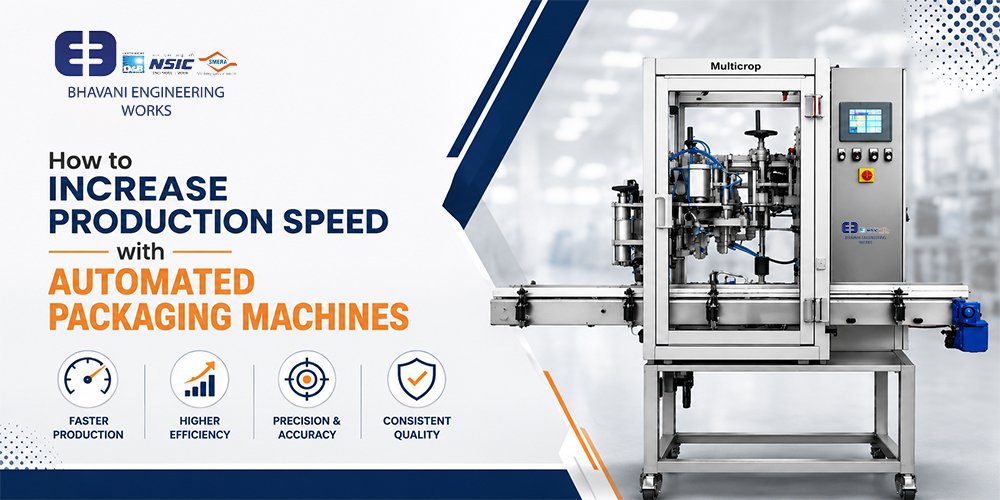
Moving your products from creation to shipment quicker often boils down to one critical area: packaging. Automated packaging machines are your best bet for significantly increasing production speed and making your entire operation run smoother. They take over repetitive tasks, reduce human error, and keep things moving at a consistent pace that manual labor just can’t match.
Why Speed Matters in Packaging
Think about it this way: every minute spent waiting for a box to be formed, a product to be loaded, or a label to be applied is a minute your product isn’t moving closer to your customer. In today’s competitive market, slow packaging directly impacts your bottom line.
Meeting Demand and Reducing Lead Times
When demand surges, slow packaging can become a serious bottleneck. Automated machines can handle increased volume without breaking a sweat, ensuring you meet those crucial deadlines and avoid disappointing customers. This responsiveness is a huge competitive advantage, allowing you to scale up quickly as needed.
Cost Savings Beyond Labor
While labour savings are a big one, speeding up packaging also means your overall operational costs can decrease. Faster throughput means less time your product spends sitting around, fewer storage costs, and a quicker return on your investment in inventory. You’re also likely to see a reduction in product damage thanks to consistent, precise handling.
Understanding Automated Packaging Equipment
It’s not just one big machine; “automated packaging ” is a whole spectrum of equipment designed to handle various stages of the packaging process. Knowing what’s available helps you pinpoint where your biggest bottlenecks are and where automation will have the most impact.
Primary Packaging Automation
This is where your product first gets its protection. Machines here directly handle the product itself.
Filling Machines for Liquids and Solids
Whether you’re bottling a beverage, portioning granular coffee, or filling capsules, automated filling machines ensure precise, consistent fills every single time. They eliminate spillage, under-filling, and over-filling, saving product and ensuring regulatory compliance. The speed varies wildly depending on the product viscosity or particle size, but even the simplest piston filler is dramatically faster than manual pouring.
Bagging and Pouching Systems
For products that go into bags or pouches, these machines form the bag from a roll of film, fill it, and then seal it. Think about snack foods, pet food, or even medical devices. Vertical form-fill-seal (VFFS) machines are fantastic for loose products, while horizontal form-fill-seal (HFFS) machines are ideal for single items or groups of items that need individual presentation. They operate at speeds that would require an army of human operators.
Blister and Skin Packaging Machines
These are perfect for securing products onto a card or within a plastic shell, often seen with consumer goods like batteries, tools, or pharmaceuticals. They create a protective, tamper-evident package efficiently, ensuring product integrity and shelf appeal.
Secondary Packaging Automation
Once your product is in its primary package, secondary packaging is about grouping and protecting those individual units.
Cartoning and Case Packing
This is where individual items or groups of items are placed into cartons or cases. Automated cartoners can form, load, and seal hundreds of cartons per minute. Case packing machines take those filled cartons and load them precisely into larger shipping cases, either horizontally or vertically, dramatically speeding up the preparation for transport. These machines reduce the risk of repetitive strain injuries for workers while maintaining a relentless pace.
Shrink Wrapping and Bundling
Many products benefit from being shrink-wrapped together, both for protection and for creating multi-packs. Automated shrink wrappers can quickly wrap items or groups of items in a tight, protective film, using heat to conform the film to the product’s shape. This is common for beverage multi-packs, software, or even industrial components.
Tertiary Packaging Automation
This final stage prepares your products for shipping and palletizing.
Palletizing Robots
Instead of manual stacking, which is labour-intensive and prone to error, robotic palletizers precisely stack boxes onto pallets according to pre-programmed patterns. This not only speeds up the process significantly but also ensures stable, uniform pallets, reducing damage during transit and optimizing truck loading space. They can work around the clock without fatigue.
Stretch Wrapping Systems
Once a pallet is loaded, it needs to be securely wrapped to prevent shifting during transport. Automated stretch wrappers rapidly apply a protective layer of stretch film, ensuring stability and weather protection. They often include integrated top-sheet applicators for complete coverage.
Key Mechanisms for Speed Enhancement
It’s not just the presence of a machine, but how it’s designed and integrated that truly boosts speed. Several core principles underpin the efficiency gains of automated packaging.
Continuous Motion and Flow
Many automated machines are designed for continuous motion, meaning products are handled and processed without stopping. Think of a conveyor belt where items are filled, sealed, and labeled all while moving. This eliminates start-stop cycles that waste time and energy in manual processes.
Synchronized Operations
Modern automated lines are highly synchronized. Each machine “talks” to the next, ensuring a smooth, uninterrupted flow of products. If one machine slows down, the others adjust, preventing pile-ups or gaps. This holistic approach to the line means the entire system operates as one cohesive unit, maximizing throughput.
Precision and Repeatability
Machines don’t get tired or distracted. They perform the same action identically every single time.
Reduced Error Rates
This precision drastically reduces errors like crooked labels, incomplete seals, or incorrect counts. Fewer errors mean less rework, less wasted material, and ultimately, a faster overall process. The consistency also leads to a higher quality product presentation, which is important for brand perception.
Optimized Material Usage
Automated systems can be calibrated to use the exact amount of packaging material needed — no more, no less. This reduces waste, which saves money and also means less time spent changing material rolls or clearing jams caused by excess material.
Integration and Data Flow
A truly efficient automated system isn’t just a collection of machines; it’s an interconnected network.
Centralized Control Systems
Modern packaging lines often have a central control system (like a SCADA or MES system) that monitors every machine. This allows operators to see the status of the entire line at a glance, identify bottlenecks in real-time, and make adjustments quickly. This real-time visibility is crucial for maintaining peak operating speed.
Predictive Maintenance and Diagnostics
Many advanced machines include sensors that collect data on their performance. This data can be used for predictive maintenance, alerting you to potential issues before they cause a breakdown. Preventing unexpected downtime is a huge factor in maintaining high production speed. Diagnostics also help pinpoint problems quickly if they do occur, minimizing the time spent troubleshooting.
Implementing Automation for Maximum Impact
Metrics | Value |
Time Saved | 30% |
Cost Reduction | 20% |
Accuracy Improvement | 95% |
Productivity Increase | 40% |
Simply buying a machine isn’t enough; strategic implementation is what makes the difference.
Auditing Your Current Process
Before you invest, take a long, hard look at your existing packaging line. Where are the true bottlenecks? Are products waiting for operators? Are there frequent stops for adjustments or material changes? Identifying these specific pain points will guide your automation strategy and ensure you invest in the right solutions.
Identifying Bottlenecks
Don’t just assume where your problems are. Use video analysis, time studies, and employee feedback to pinpoint the exact points where production slows down. It might not always be where you expect. Perhaps it’s not the actual filling, but the manual application of a tamper-evident seal, or the slow rate at which empty boxes are formed.
Quantifying Potential Gains
Once you’ve identified bottlenecks, try to put a number on the time savings and cost reductions that automation in those areas could bring. This helps build a business case for your investment.
Phased Approach to Implementation
You don’t have to automate everything overnight. A phased approach often works best.
Starting with Key Bottlenecks
Invest in automation for the biggest bottlenecks first. This delivers immediate, tangible results which can then fund further automation. For example, if manual case packing is causing a massive slowdown, start there.
Scalability Considerations
Choose machinery that can grow with your business. Will it be able to handle increased volume in the future? Is it flexible enough to accommodate new product sizes or types with minimal retooling? Thinking long-term avoids premature obsolescence.
Training and Support
Automated machines are sophisticated pieces of equipment; your team needs to be ready.
Operator Training
Your operators will need thorough training not just on how to run the machines, but also how to perform basic maintenance and troubleshooting. Empowering them with knowledge reduces reliance on external technicians and speeds up resolution of minor issues.
Maintenance Protocols
Establish clear maintenance schedules and protocols. Regular preventative maintenance is critical to keeping the machines running at peak efficiency and preventing costly, speed-killing breakdowns. Invest in spare parts for critical components to minimize downtime.
Maintaining and Optimizing Speed Over Time
Automation isn’t a “set it and forget it” solution. Ongoing attention ensures you continue to reap the benefits.
Performance Monitoring
Regularly track the key performance indicators (KPIs) of your packaging line. This includes throughput, uptime, downtime reasons, and waste rates.
Data-Driven Adjustments
Use the data you collect to continually fine-tune your operations. Are there recurring minor stops you can eliminate? Can you optimize machine settings for different product runs? Data empowers continuous improvement.
Benchmarking
Compare your line’s performance against industry benchmarks or your own historical data. This helps you understand if you’re truly maximizing the potential of your automated equipment.
Continuous Improvement
The world of packaging technology is constantly evolving.
Exploring New Technologies
Stay informed about new advancements in packaging automation. Are there new robotic solutions, vision systems, or integrated software platforms that could further enhance your speed and efficiency?
Feedback Loops
Encourage your operators and maintenance staff to provide feedback on the machinery. They are on the front lines and often have the best insights into how things could be improved or streamlined. Their input is invaluable for ongoing optimization.
Automated packaging machines are more than just fancy gadgets; they are strategic investments that pave the way for increased production speed, greater efficiency, and a more competitive business. By understanding their capabilities, strategically implementing them, and continually optimizing their performance, you can transform your packaging line from a bottleneck into a powerful accelerator for your entire operation.
FAQs
- What are automated packaging machines?
Automated packaging machines are advanced machinery designed to streamline the packaging process by automating various tasks such as filling, sealing, labeling, and palletizing. These machines are equipped with sensors, robotics, and computerized controls to increase production speed and efficiency.
- How do automated packaging machines increase production speed?
Automated packaging machines increase production speed by reducing manual labor, minimizing errors, and optimizing the packaging process. These machines can perform tasks at a much faster rate than human workers, leading to higher output and faster turnaround times.
- What are the benefits of leveraging automated packaging machines for production speed?
The benefits of using automated packaging machines for production speed include increased efficiency, reduced labour costs, improved accuracy, consistent output quality, and the ability to handle high-volume production demands. These machines also free up human workers to focus on more complex tasks.
- How can automated packaging solutions optimize packaging operations for faster output?
Automated packaging solutions optimize packaging operations for faster output by streamlining the entire process, from product handling to final packaging. These solutions can integrate seamlessly with existing production lines, reducing downtime and increasing overall throughput.
- What factors should be considered when implementing automated systems for faster packaging production?
When implementing automated systems for faster packaging production, factors such as the specific needs of the production line, the type of products being packaged, available floor space, budget constraints, and the level of technical expertise required should be carefully considered. Additionally, training and maintenance requirements should be taken into account to ensure long-term success.
Category