
Role of Automation in Packaging Lines: Latest Trends for 2026
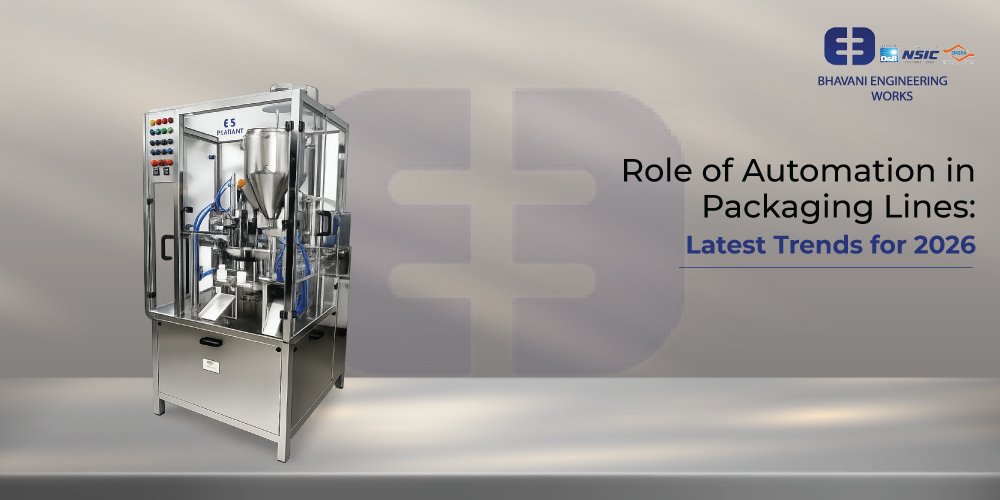
Automation is transforming modern packaging lines faster than ever before. By 2026, packaging systems are expected to become smarter, faster, and more connected through robotics, artificial intelligence, sensors, and data-driven controls. Instead of automating only one machine or one process, manufacturers are now building complete intelligent packaging lines that work together seamlessly. This shift helps businesses improve productivity, reduce downtime, maintain quality, and stay competitive in changing markets.
Why Is Automation Taking Center Stage in Packaging Lines?
The packaging industry is under constant pressure to produce more products in less time while maintaining consistent quality and reducing operating costs. Manual processes often struggle to meet these demands. Automation provides a practical solution by increasing efficiency and allowing human workers to focus on supervision, quality control, and higher-value tasks.
Meeting Changing Consumer Demands
Consumers today expect variety, faster delivery, personalized packaging, and premium presentation. Businesses often need to handle multiple SKUs, seasonal packaging, and smaller production batches. Automated packaging systems can adapt more quickly to these changes, making product transitions faster and smoother.
Solving Labor Shortages
Many industries are facing shortages of skilled workers for repetitive packaging jobs. Automation reduces dependency on manual labour by handling tasks such as packing, labeling, palletizing, and sorting. This allows companies to continue production even when labour availability is limited.
Improving Workplace Safety
Packaging lines often involve repetitive motion, lifting, or contact with moving machinery. Automated systems reduce these risks by assigning dangerous or physically demanding tasks to machines and robots. This creates a safer work environment and lowers injury-related costs.
What Are the Latest Advancements in Packaging Automation Technology for 2026?
Packaging automation technology continues to evolve rapidly. New systems are becoming smarter, more flexible, and easier to integrate into existing production lines.
Collaborative Robots (Cobots)
Cobots are one of the fastest-growing trends in packaging automation. Unlike traditional industrial robots, cobots are designed to work safely alongside humans. They are widely used for pick-and-place tasks, case packing, palletizing, and inspection. Their easy programming and lower installation cost make them ideal for many manufacturers.
Vision Systems and Artificial Intelligence
Modern packaging lines now use camera-based vision systems combined with AI. These systems can inspect labels, detect defects, verify barcode accuracy, monitor seal quality, and identify damaged packaging at high speed. AI improves inspection accuracy over time by learning from previous production data.
Predictive Maintenance with IoT
IoT sensors installed in packaging machines collect real-time data such as vibration, temperature, speed, and component wear. This data helps predict failures before they happen. Maintenance teams can schedule repairs in advance, reducing unexpected downtime and costly breakdowns.
Modular and Flexible Packaging Systems
Manufacturers now prefer modular packaging lines that can be expanded or reconfigured easily. These systems allow faster changeovers, easier upgrades, and flexible production planning. Modular design is especially useful for companies launching new products frequently.
How Does Automation Streamline Packaging Processes?
The true power of automation comes from connecting multiple machines into one integrated system. This creates a smooth packaging workflow from start to finish.
End-to-End Packaging Automation
Modern automated lines can handle product feeding, filling, sealing, labeling, coding, case packing, palletizing, and warehouse transfer in one connected process. This reduces bottlenecks and improves production flow.
Data-Driven Process Optimization
Integrated systems generate valuable production data. Manufacturers can monitor throughput, downtime, rejection rates, machine efficiency, and energy consumption. These insights help improve line performance and reduce waste.
Human-Machine Collaboration
Automation does not remove people from the process. Instead, it changes their role. Operators now monitor systems, solve technical issues, manage quality, and optimize workflows. Better interfaces and touchscreen controls make operations easier and more efficient.
How Does Automation Improve Efficiency and Productivity in Packaging Lines?
One of the main reasons companies invest in packaging automation is to increase output while maintaining consistent quality.
Metrics | 2019 | 2020 | 2021 |
Employee Productivity | 85% | 87% | 89% |
Operational Efficiency | 75% | 78% | 80% |
Cost Savings | 500,000 | 600,000 | 700,000 |
Increased Throughput and Speed
Automated packaging machines run faster than manual systems and maintain the same speed over long shifts. This increases production volume and improves order fulfilment speed.
Consistent Quality and Reduced Errors
Machines follow programmed settings precisely. This ensures uniform packaging quality, correct labeling, proper sealing, and fewer rejected products. Reduced human error also lowers material waste.
Optimized Material Usage
Automated systems use accurate dosing, cutting, wrapping, and sealing controls. This minimizes product giveaway and reduces film, adhesive, carton, and label waste. It also supports sustainability goals.
What Are the Future Trends in Packaging Automation Beyond 2026?
The future of packaging automation will focus on intelligence, flexibility, and sustainability.
Hyper-Personalization and Batch-of-One Production
Future packaging lines will be capable of producing personalized packages for individual customers. This is especially useful for e-commerce, promotional campaigns, and customized branding. AI-driven systems will adjust packaging in real time.
Self-Optimizing Packaging Lines
With machine learning, future systems will automatically adjust speed, pressure, filling levels, and operating settings to maximize efficiency. This reduces manual intervention and improves continuous performance.
Augmented Reality for Maintenance and Training
AR technology will support technicians by displaying digital repair guides, machine data, and training instructions directly on equipment. This speeds up maintenance and reduces training time.
Sustainable Packaging Automation
Automation will help reduce energy use, optimize recyclable packaging materials, and minimize waste. Machines will be designed to support eco-friendly films, compostable packs, and lightweight packaging materials.
Stronger Cybersecurity Measures
As packaging lines become connected to networks and cloud systems, cybersecurity becomes essential. Future systems will include stronger protection against unauthorized access, data theft, and operational disruption.
What Should Businesses Consider Before Investing in Packaging Automation?
Before upgrading a packaging line, companies should evaluate their production goals, current bottlenecks, labour challenges, available space, and future expansion plans. Choosing scalable systems with reliable after-sales support is important. It is also beneficial to select machines that integrate easily with ERP, MES, and warehouse management systems.
How Can Companies Maximize ROI from Packaging Automation?
Businesses achieve better return on investment when automation is implemented strategically. Selecting the right machines, training staff properly, using preventive maintenance, and tracking production data all contribute to higher ROI. Long-term savings often come from reduced labour dependency, lower waste, and improved output quality.
Conclusion
Automation is no longer optional for many manufacturers. By 2026, packaging lines will become smarter, more connected, and more adaptive than ever before. Technologies such as robotics, AI, IoT, predictive maintenance, and modular systems are helping businesses increase efficiency, reduce costs, and improve product quality. Companies that invest in modern packaging line automation today will be better positioned for growth, flexibility, and long-term success.
FAQs
- What is the role of automation in packaging lines?
Automation improves packaging speed, consistency, quality control, and operational efficiency while reducing manual labour and errors.
- What are the latest trends in automation technology for packaging lines in 2026?
Major trends include cobots, AI vision inspection, IoT monitoring, modular systems, predictive maintenance, and smart data integration.
- How does automation enhance efficiency and productivity on the packaging line?
Automation reduces downtime, increases throughput, minimizes waste, improves accuracy, and supports faster changeovers.
- What are the future trends in automation for packaging lines?
Future trends include self-optimizing systems, personalized packaging, AR maintenance tools, sustainable automation, and stronger cybersecurity.
- What is the impact of automation on the packaging industry in 2026?
Automation leads to lower operating costs, higher production output, better quality, improved flexibility, and stronger competitiveness.
Category