
Ointment Filling Machines in Pharma: Accuracy, Compliance & Efficiency
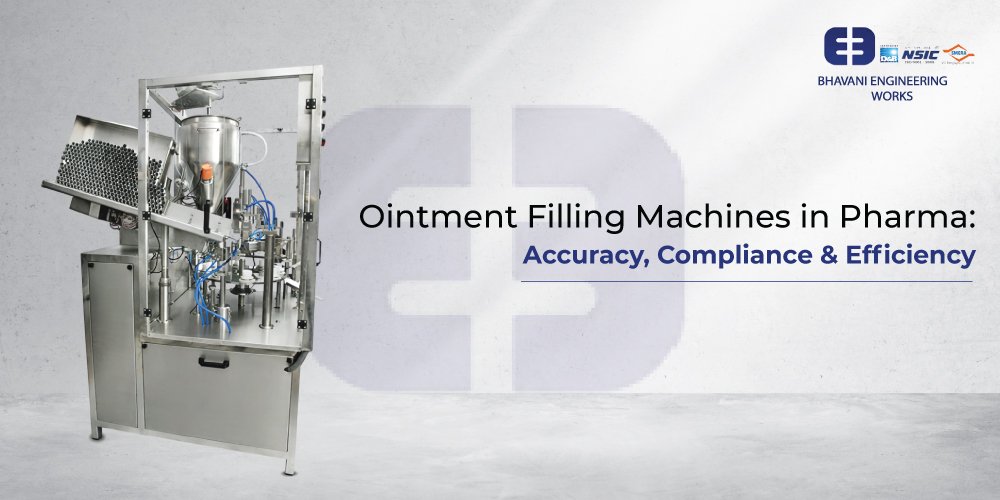
Ointment filling machines play a vital role in the pharmaceutical industry because they ensure medicines are filled accurately, packed hygienically, and produced efficiently. In pharma manufacturing, every gram of ointment, cream, gel, or paste must meet strict quality standards. The right ointment filling machine helps manufacturers maintain dosage accuracy, comply with regulations, and improve production speed while protecting patient safety.
Why Is Accuracy Important in Ointment Filling Machines?
Accuracy is one of the most critical factors in pharmaceutical filling operations. Unlike general packaging industries, pharma products require exact quantities in every tube, jar, or container.
Ensuring Correct Dosage and Patient Safety
When patients use medicated ointments, they expect the correct dosage in every pack. Underfilled products may reduce treatment effectiveness, while overfilled products can increase side effect risks or cause regulatory issues. A high-precision pharma ointment filling machine ensures each unit contains the intended amount of medicine, supporting patient safety and treatment consistency.
Minimizing Product Waste and Production Cost
Even a small overfill across thousands of units can result in major product loss. Active pharmaceutical ingredients are often expensive, so accurate filling helps reduce wastage and improve profit margins. At the same time, underfilled products may lead to rejected batches or market complaints. Precision filling protects both quality and cost efficiency.
Maintaining Product Quality and Brand Reputation
Consistent fill levels create trust in pharmaceutical brands. When consumers receive properly packed products every time, it reflects strong manufacturing standards. Uniform packaging, accurate weight, and clean sealing help maintain a professional brand image and customer confidence.
How Do Ointment Filling Machines Help with Pharmaceutical Compliance?
The pharmaceutical industry operates under strict regulations. Filling machines must meet hygiene, validation, and documentation requirements to ensure product safety.
Good Manufacturing Practices (GMP) Compliance
Modern ointment tube filling machines are designed to meet GMP standards. This includes hygienic stainless steel construction, easy cleaning surfaces, contamination prevention, and validated operating systems. GMP compliance is essential for pharmaceutical manufacturing approvals.
Meeting FDA, WHO, and Global Regulatory Standards
Pharma companies supplying local or international markets must follow standards set by authorities such as FDA, EMA, WHO, or other national regulators. Filling machines should support accurate dosing, traceability, repeatability, and safe product handling. Choosing compliant equipment helps avoid inspection failures and legal risks.
Data Integrity and Audit Trails
Automated machines often include PLC systems and digital controls that record batch details, machine settings, production counts, and alarms. These audit trails help during inspections and ensure complete transparency in manufacturing processes.
How Can Efficiency Be Improved in Ointment Filling Processes?
Efficiency is essential for pharma companies looking to increase output while maintaining quality. The right machine improves productivity without compromising compliance.
Higher Filling Speed and Throughput
Modern automatic ointment filling machines are built for faster production using multiple nozzles, synchronized systems, and precise dispensing controls. High-speed filling allows manufacturers to meet growing demand while maintaining accuracy.
Reduced Downtime and Faster Cleaning
Downtime directly affects production targets. Machines with quick cleaning systems, tool-free changeovers, and CIP/SIP features reduce stoppages. Easy maintenance design also helps keep the production line running smoothly.
Integration with Packaging Lines
Many pharma manufacturers connect filling machines with capping, sealing, labeling, batch coding, and cartoning systems. This creates a complete automated packaging line that improves workflow and reduces manual labor.
What Should You Consider When Selecting an Ointment Filling Machine?
Choosing the right machine is a long-term investment. Several practical factors should be reviewed before purchase.
Product Viscosity and Formulation Type
Ointments, creams, gels, and medicated pastes all have different consistencies. The machine must match the product texture for smooth and accurate filling. Thick formulations usually need piston fillers, while lighter creams may use pump-based systems.
Production Capacity and Future Growth
Your machine should match current demand while supporting future expansion. Small companies may prefer semi-automatic systems, while large manufacturers often require fully automatic high-speed lines.
Automation Level and Operator Ease
Machines with touchscreen controls, recipe memory, auto-adjustment, and simple interfaces reduce operator errors. A user-friendly system improves production efficiency and shortens training time.
Machine Footprint and Facility Layout
Pharmaceutical plants often have limited and highly controlled space. Machine size, utility needs, cleanroom compatibility, and maintenance access should be considered before installation.
Which Types of Ointment Filling Machines Are Common in Pharma?
Different machine technologies are used depending on product type and production scale.
Tube Filling Machines
These are commonly used for ointments, creams, gels, and medicinal pastes packed in aluminum or laminated tubes. They usually include filling, sealing, coding, and trimming functions.
Jar and Container Filling Machines
Used for larger ointment packs, petroleum jelly, herbal creams, and specialty pharmaceutical products packed in jars or tubs.
Piston Filling Machines
Ideal for thick ointments and high-viscosity formulations requiring accurate volume control.
Servo-Controlled Filling Machines
These advanced machines offer high precision, programmable settings, and better repeatability for regulated pharma environments.
What Are the Latest Advancements in Ointment Filling Technology?
Pharmaceutical equipment continues to improve through automation and smart technology.
Smart Sensors and Real-Time Monitoring
Modern machines use sensors to monitor fill volume, pressure, temperature, and product flow. This reduces errors and improves quality control.
Vision Inspection Systems
Camera-based inspection systems check fill level, cap quality, seal integrity, and packaging defects. Non-compliant units are automatically rejected.
Predictive Maintenance
Advanced systems analyze machine performance and alert operators before component failure occurs. This reduces unexpected downtime and maintenance costs.
Aseptic Filling Technology
For sterile ointments and sensitive pharmaceutical products, advanced aseptic systems reduce contamination risk and meet strict regulatory requirements.
How Do Automated Ointment Filling Machines Increase Productivity?
Automation is one of the biggest drivers of growth in pharmaceutical manufacturing.
Continuous Production with Lower Labor Dependence
Automatic machines can run continuously with minimal manual involvement. This increases output while reducing labor dependency.
Consistent Quality at High Speed
Unlike manual processes, automated machines maintain the same filling accuracy throughout long production shifts. This improves consistency and reduces rejection rates.
Better Traceability and Documentation
Every production cycle can be digitally recorded. This helps with compliance, batch tracking, audits, and quality assurance.
Seamless Production Line Integration
Automated systems easily connect with labeling, packing, coding, and cartoning machines for complete end-to-end manufacturing efficiency.
How Do You Maintain an Ointment Filling Machine?
Regular maintenance is necessary for long machine life and uninterrupted production.
Cleaning and Sanitization
Machines should be cleaned regularly using approved pharmaceutical cleaning procedures to avoid contamination.
Calibration and Validation
Routine calibration ensures accurate filling performance. Validation confirms the machine consistently meets required standards.
Spare Parts and Preventive Maintenance
Keeping essential spare parts available and following preventive maintenance schedules reduces downtime.
Operator Training
Trained operators can run the machine efficiently, identify issues early, and maintain quality output.
Conclusion
An ointment filling machine is a critical investment for pharmaceutical manufacturers focused on quality, compliance, and productivity. The right machine ensures precise dosing, hygienic packaging, faster production, and full regulatory support. Whether you need a semi-automatic unit or a fully automated pharma filling line, selecting the right equipment based on product type and production goals will support long-term business growth.
FAQs
- What are the key considerations for selecting ointment filling machines?
Important factors include product viscosity, production capacity, automation level, compliance standards, machine quality, and service support.
- How can pharmaceutical companies ensure compliance with regulations in ointment filling machines?
Companies should use GMP-compliant machines, perform regular validation, maintain documentation, and follow approved operating procedures.
- What is the importance of accuracy in ointment filling machines?
Accuracy ensures correct dosage, reduces wastage, maintains quality, and supports patient safety.
- How can efficiency be improved in ointment filling processes?
Efficiency improves through automation, faster cleaning systems, reduced downtime, and integrated packaging lines.
- What are the latest advancements in ointment filling technology?
Modern advancements include smart sensors, vision inspection, predictive maintenance, PLC controls, and aseptic filling systems.
Category