
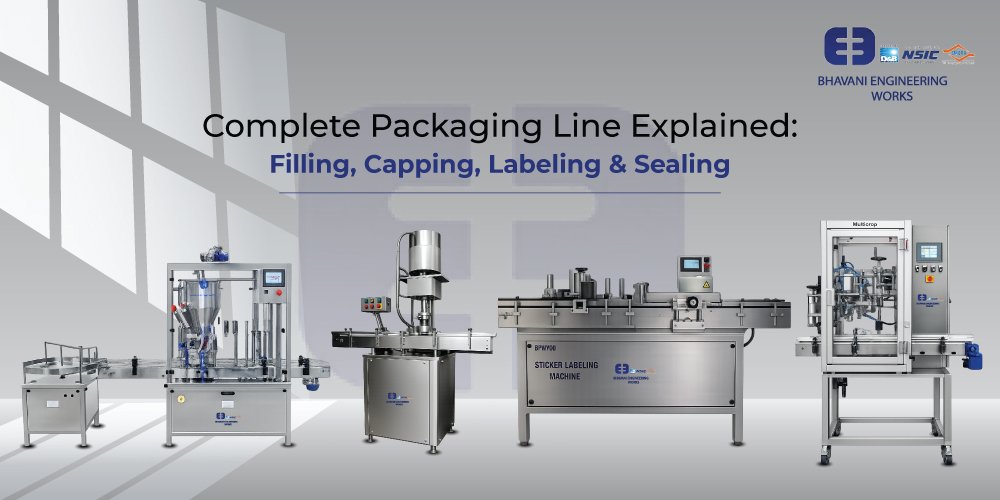
A complete packaging line is essentially a series of integrated machines that work together to take a product from its initial state to a finished, ready-to-distribute package. Think of it as a well-choreographed dance, where each machine plays a crucial part in filling, capping, labeling, and sealing your product efficiently and consistently. This automation is designed to streamline your production, reduce manual labour, and ensure uniformity across all your packaged goods.
Introduction to Complete Packaging Line Automation
Packaging line automation isn’t about replacing people entirely; it’s about optimizing processes and freeing up your workforce for more intricate tasks. When we talk about “complete” automation, we’re referring to systems that handle the entire journey of a product through its packaging phase without significant manual intervention. This often starts with an empty container and ends with a retail-ready item, sometimes even palletized and ready for shipping.
The primary goal here is efficiency and consistency. Humans are great at many things, but performing the same precise motion thousands of times a day isn’t one of them. Machines excel at repetitive tasks, maintaining tight tolerances, and working tirelessly. This translates to fewer errors, less waste, and a faster throughput, ultimately impacting your bottom line. It’s about getting your product out the door reliably and professionally.
Why Automate Your Packaging?
The decision to automate usually boils down to a few key factors. First, consider scale. If you’re producing a small batch of artisanal goods by hand, full automation probably isn’t necessary. But as production volume increases, manual packaging quickly becomes a bottleneck and a significant cost. Labor costs, especially for repetitive tasks, can quickly outweigh the initial investment in machinery.
Second, consistency. Every bottle of sauce, every bag of coffee, every box of widgets needs to look and feel the same to the end consumer. Automated lines deliver this uniformity reliably. Labels are applied straight, caps are tightened to the same torque, and fill levels are consistent. This consistency builds brand trust and reduces customer complaints.
Third, speed. Manual processes are inherently slower and subject to human fatigue. Automated lines can operate continuously at pre-set speeds, significantly increasing your output per hour or day. This is critical for meeting demand and reacting quickly to market opportunities.
Filling Process in Packaging Line
The filling stage is where your product actually enters its container. This might seem straightforward, but the variety of products and containers demands a diverse range of filling technologies. The choice of filler depends heavily on your product’s characteristics – its viscosity, temperature, particulate content, and whether it’s a liquid, solid, or powder.
Accuracy is paramount here. Underfilling means you’re giving away product and potentially facing regulatory issues. Overfilling means wasted product and potentially messy containers. Modern filling machines use sophisticated sensors and control systems to ensure precise measurement each and every time.
Types of Filling Machines
For liquids, common methods include piston fillers, which use a precise volume displacement, ideal for thicker liquids like sauces or creams. Gravity fillers are simpler, relying on the product’s weight to fill containers to a consistent level, suitable for free-flowing liquids. Pump fillers use a positive displacement pump to move product, offering versatility for a wide range of viscosities. Net weight fillers, often used for more expensive liquids, measure the exact weight of the product being dispensed, providing the highest level of accuracy regardless of temperature or density fluctuations.
For powders and granules, auger fillers are a popular choice. These use a rotating screw to dispense a specific volume or weight of product. The auger’s speed and rotation can be precisely controlled for different products. Vibratory fillers can also be used for free-flowing granular products, often relying on time and vibration to achieve a consistent fill.
For solid items, like candies, tablets, or small components, multihead weighers are often employed. These incredibly precise machines use multiple weigh buckets to combine product until the target weight is achieved. They are exceptionally fast and accurate, minimizing product giveaway.
Capping and Sealing in Packaging Line
Once your container is filled, the next critical step is to close it up properly. This involves either capping or sealing, depending on the container and product. The goal isn’t just to keep the product in, but to protect it from contamination, maintain freshness, and provide a secure, tamper-evident closure for the consumer.
A poorly capped or sealed product can lead to spills, spoilage, and a damaged brand reputation. Automation in this area ensures that every cap is applied with the correct torque and every seal is robust and consistent.
Capping Technologies
For bottles and jars, capping machines are essential. Spindle cappers are widely used for screw-on caps, employing multiple spinning wheels to progressively tighten the cap as the container moves through the machine. They are versatile and can handle a range of cap sizes and types.
Chuck cappers apply caps by lowering a spinning chuck onto the cap, twisting it onto the container. These offer precise torque control and are often used for delicate or custom caps. Snap cappers are for caps that simply press onto an opening, such as some plastic food containers, utilizing pressure to secure the lid.
Sealing Techniques
Beyond traditional caps, many products require additional seals. Induction sealing is a popular method for creating a tamper-evident, airtight seal on plastic containers. An electromagnetic field heats a foil liner within the cap, bonding it to the container’s rim. This offers excellent product protection and extends shelf life.
For bags, pouches, and some cartons, heat sealing is predominant. This involves heating and pressing two layers of material together to create a strong bond. Different types of heat sealers exist, from bar sealers for simple straight seals to rotary sealers for continuous sealing of moving bags, and impulse sealers which use a quick burst of heat for efficiency.
Labeling in Packaging Line
Labeling in Packaging Line Metrics | Value |
Labeling Accuracy | 98% |
Labeling Speed | 200 units per minute |
Labeling Errors | 5 per 1000 units |
Labeling is where your product gets its identity. It’s what tells the customer what’s inside, nutritional information, branding, and regulatory details. A well-applied label not only conveys information but also enhances the product’s aesthetic appeal on the shelf. Automated labeling ensures labels are straight, secure, and consistently positioned.
Poor labeling can lead to product rejection, compliance issues, and a generally unprofessional appearance. Automation ensures that every product emerging from the line presents perfectly.
Labeling Machine Varieties
Pressure-sensitive labelers are the most common type and probably what you envision when thinking of a label machine. They peel self-adhesive labels from a roll and apply them to the product using various methods, such as wipe-on, blow-on, or tamp-on, depending on the product’s shape and the desired placement. They are incredibly versatile and can handle a multitude of label shapes and sizes.
For products that need wraparound labels, like bottles or cans, rotary labelers are often used. These machines can apply labels to multiple containers simultaneously as they rotate, offering very high speeds and precise placement.
Shrink sleeve labelers apply a heat-shrinkable label that conforms perfectly to the container’s shape once heat is applied. This creates a visually striking, full-body graphic that is often tamper-evident. These are common for beverages and cosmetics.
Print and apply labelers integrate a printer directly into the labeling machine, allowing for variable data like batch numbers, expiration dates, or barcodes to be printed onto labels just before application. This is crucial for traceability and inventory management.
Benefits of Complete Packaging Line Automation
The cumulative effect of automating individual packaging stages is a powerful synergy that transforms your production capabilities. It’s more than just a collection of machines; it’s a complete shift in how products move through your facility.
The most obvious benefit is the dramatic increase in production speed and throughput. Manual processes simply cannot compete with the continuous, high-speed operation of an automated line. This means you can meet larger orders, respond to market demands quicker, and ultimately sell more product.
Beyond speed, consistency and quality control are significantly improved. Machines don’t get tired or distracted. Every fill is accurate, every cap is secure, and every label is straight. This reduces product waste, minimizes rework, and ensures a uniform, professional product reaches the consumer every time, bolstering brand reputation.
Another critical advantage is cost reduction. While the initial investment in automation can be substantial, the long-term savings are often significant. Labor costs for repetitive tasks are reduced, waste from errors decreases, and the overall efficiency of your operation improves. Furthermore, greater control over processes and fewer human errors can lead to less product recall risk.
Enhanced Safety and Hygiene
Automated lines can operate in environments that are difficult or hazardous for human workers, such as very cold, very hot, or sterile conditions. This enhances worker safety by removing them from repetitive, strain-inducing tasks or exposure to certain chemicals.
In industries like food, beverage, and pharmaceuticals, hygiene is paramount. Automated lines can be designed for easy cleaning and sterilization, minimizing human contact with the product, which significantly reduces the risk of contamination.
Data Collection and Predictive Maintenance
Modern packaging lines are often equipped with sensors and software that collect valuable production data. This data can be analyzed to identify bottlenecks, optimize machine settings, and predict maintenance needs before they become critical failures. This proactive approach minimizes downtime and keeps your line running smoothly.
Key Components of a Packaging Line
While specific machines vary based on the product, several foundational components common to most automated packaging lines ensure smooth operation and product flow.
Beyond the core filling, capping, and labeling machines, you’ll almost always find conveyor systems. These are the arteries of the packaging line, physically moving containers from one machine to the next. They come in various forms – belt, chain, slat, or roller conveyors – chosen based on the container type and product flow requirements.
Accumulation tables and buffering zones are crucial. These temporarily hold products when one machine is momentarily faster or slower than the next. They prevent jams and ensure a continuous flow, even if there are minor interruptions in specific stages. Without them, a momentary pause at one machine could bring the entire line to a halt.
Container handling equipment is also vital. This includes unscramblers which orient empty bottles or containers from bulk into a single file line. Loaders and unloaders integrate products or components into and out of the line. Bottle cleaners or rinsers ensure containers are pristine before filling, especially for food and pharmaceutical products.
Inspection systems play a critical role in quality control. These can include vision systems to check for cap presence, label placement, or fill levels. Metal detectors ensure no foreign objects are present, and checkweighers verify the final package weight. These systems help catch errors before products leave the facility.
Future Trends in Packaging Line Automation
The world of packaging automation is constantly evolving, driven by demands for greater efficiency, flexibility, and sustainability. Manufacturers are always looking for ways to improve, and technology is providing the answers.
One prominent trend is the increasing adoption of robotics. Collaborative robots (cobots) are becoming more common, working alongside human operators for tasks like picking and placing, palletizing, or complex assembly. Industrial robots, already a staple in many lines, are becoming more agile and integrated. Robot vision systems allow for greater precision and adaptability to different products.
Artificial intelligence (AI) and machine learning (ML) are making packaging lines smarter. AI can optimize machine settings in real-time, predict maintenance needs more accurately, and even detect subtle quality control issues that might be missed by traditional vision systems. This leads to predictive maintenance, reducing unexpected downtime.
Industry 4.0 and the Internet of Things (IoT) are transforming how packaging lines are managed. Machines are increasingly interconnected, exchanging data in real-time. This allows for centralized monitoring, remote diagnostics, and better overall control of the production process from anywhere. Managers can gain deeper insights into efficiency, OEE (Overall Equipment Effectiveness), and identify areas for improvement.
Sustainability and Flexibility
Consumer demand and regulatory pressures are pushing for more sustainable packaging solutions, and automation is adapting. Machines are being designed to handle a broader range of packaging materials, including recycled content, compostable films, and lighter-weight containers. Automation can also optimize material usage, reducing waste during the packaging process itself.
Finally, flexibility and customization are becoming more important. Consumers want variety, and manufacturers need lines that can quickly switch between different product sizes, shapes, and types of packaging with minimal downtime. Modular designs, quick-change tooling, and software-driven adjustments are enabling this kind of adaptability, allowing companies to respond rapidly to changing market demands without investing in entirely new lines.
FAQs
What is a complete packaging line automation?
A complete packaging line automation refers to the integration of various packaging processes such as filling, capping, labeling, and sealing into a single automated system. This automation streamlines the packaging process, reduces manual labour, and improves efficiency.
What are the key components of a packaging line?
The key components of a packaging line include filling machines, capping machines, labeling machines, sealing machines, conveyors, inspection systems, and packaging materials such as bottles, caps, and labels. These components work together to automate the entire packaging process.
What are the benefits of complete packaging line automation?
The benefits of complete packaging line automation include increased production efficiency, reduced labour costs, improved product quality and consistency, faster time to market, and better utilization of resources. Automation also helps in reducing errors and minimizing product waste.
What are the future trends in packaging line automation?
The future trends in packaging line automation include the use of advanced robotics for handling and packaging, integration of artificial intelligence for predictive maintenance and quality control, implementation of sustainable packaging materials, and the development of smart packaging technologies for improved traceability and consumer engagement.
What is the filling process in a packaging line?
The filling process in a packaging line involves transferring a product into its packaging container. This can be done using various filling techniques such as gravity filling, piston filling, or vacuum filling, depending on the type of product and packaging. The goal is to accurately fill the containers with the right amount of product.
Category