
Automatic vs Semi-Automatic Filling Machines: Cost, ROI & Efficiency Comparison
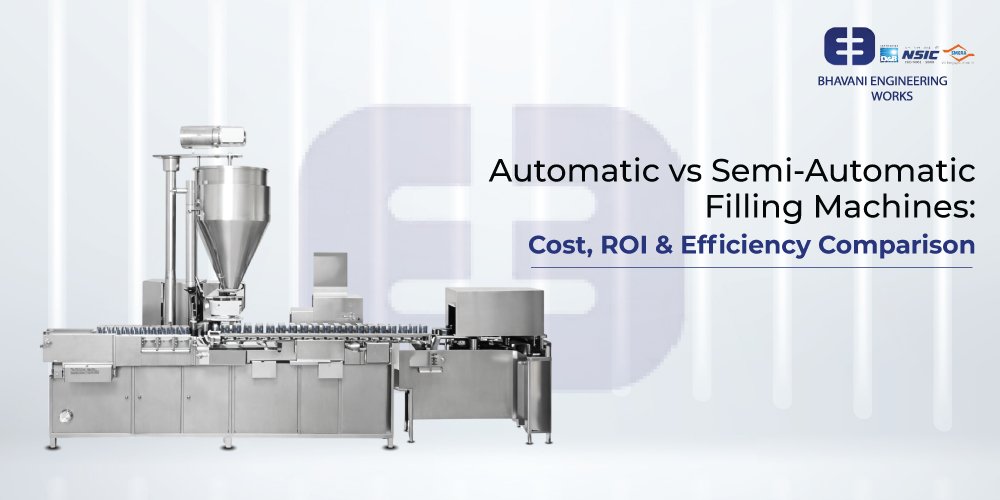
Figuring out whether an automatic vs semi automatic filling machine is the right move for your business often boils down to a few key things: how much you’re looking to spend, how quickly you want to see a return on that investment, and how much you need to produce. In a nutshell, semi-automatic machines usually mean a lower upfront cost and are great for smaller operations or those with varying product lines. Automatic machines, on the other hand, demand a bigger initial outlay but can dramatically boost production speed and cut down on labor costs in the long run. The best choice really depends on your specific situation.
Understanding the Core Differences
When you’re looking at filling machines, the “automatic” versus “semi-automatic” label tells you a lot about how much hands-on work is involved. It’s not just about different buttons to push; it’s about the entire workflow.
Semi-Automatic: The Hands-On Helper
Think of a semi automatic machine as a smart tool that streamlines a specific part of your filling process, but still needs a human to guide it. You’ll typically be involved in placing containers, starting the fill cycle, capping, and then removing the filled product. The machine takes care of the accurate dispensing of your liquid, powder, or viscous product. This makes them ideal for businesses that might not have the consistent, high-volume runs that justify a fully automated setup. They offer a significant step up from completely manual filling, reducing spills and improving accuracy with less physical strain.
- Container Handling: You, or an operator, will generally need to manually place each container under the filling nozzle.
- Fill Activation: The filling process itself is usually triggered by a button or a sensor that detects the container.
- Product Dispensing: This is where the machine shines, ensuring a consistent volume or weight of product is dispensed.
- Dosing Accuracy: Semi-automatic machines are designed to be quite precise, minimizing product giveaway.
- Capping and Sealing: Often, the capping or sealing operation is a separate manual step that follows the filling.
- Flexibility: These machines are often designed for quick changeovers between different product types or container sizes, which is a big plus for diverse product lines.
Automatic: The Set-It-and-Forget-It Workhorse
Automatic filling machines are built for efficiency and throughput. Once set up, they can run continuously with minimal human intervention. This means containers are fed into the machine, filled, and then moved on for capping, sealing, or packaging without an operator needing to touch each individual unit. This level of automation is a game-changer for businesses with high production demands.
- Automated Container Transfer: Containers are typically fed into the machine via a conveyor system or an indexing mechanism.
- Synchronized Filling: The filling operation is integrated into the machine’s cycle, often happening as containers move past the filling heads.
- Integrated Operations: Many automatic machines can incorporate multiple steps, such as filling, capping, and even sealing, into a single, continuous process.
- High Throughput: The primary benefit is the ability to fill a large number of containers in a short period.
- Reduced Manual Handling: Minimizes direct contact with products and reduces the potential for operator fatigue or errors.
- Specific Application Focus: While some automatic machines are versatile, they are often optimized for specific product types and production volumes.
Cost Considerations: Weighing the Initial Investment
When you’re looking at your budget, the price tag of a filling machine is usually one of the first things you’ll notice. There’s a clear difference in the upfront cost between semi-automatic and automatic models, and understanding this is crucial for your financial planning.
Semi-Automatic Price Points
Generally, you’ll find that semi automatic filling machines are significantly more affordable at the point of purchase. This makes them an accessible option for startups, smaller businesses, or those in niche markets where production volumes don’t warrant a massive investment. The complexity and the number of integrated automated functions are lower, which translates directly into a lower manufacturing cost for the machine itself, and therefore a lower price for you.
- Lower Upfront Capital: The most significant advantage is the reduced initial expenditure.
- Simpler Technology: They often employ less complex mechanical and electronic systems.
- Scalability: You can often start with one or two semi-automatic machines and add more as your business grows, spreading the cost over time.
- Maintenance Costs: While not always the case, simpler machines can sometimes have lower long-term maintenance costs due to fewer intricate parts.
Automatic Machine Investment
Automatic filling machines represent a much larger initial investment. This is due to the sophisticated engineering, integration of multiple automated functions, and the robust construction required for continuous, high-speed operation. These machines are designed to handle higher volumes and often incorporate advanced features like integrated quality control sensors or complex changeover systems.
- Significant Capital Outlay: The upfront cost is considerably higher.
- Advanced Engineering: Incorporates complex automation, robotics, and integrated systems.
- Long-Term Cost Savings: The justification for this higher initial cost often lies in the labor savings and increased output over time.
- Customization Options: Automatic machines can often be highly customized, which can further increase the price depending on the features you require.
ROI: How Quickly Will You See Your Money Back?
Return on Investment (ROI) is more than just the initial purchase price; it’s about how much money the machine will save you and make you over its lifespan. This is where the picture can get quite interesting, as a more expensive machine can often provide a better ROI.
ROI for Semi-Automatic Machines
Semi-automatic machines offer a quicker path to ROI for many smaller operations. Because the initial cost is lower, the break-even point is reached sooner. You start seeing a return through reduced product giveaway, improved fill accuracy, and by freeing up operator time from purely manual filling tasks to more value-added activities. However, the labor cost per unit filled remains a significant factor.
- Faster Break-Even: The lower initial investment means you start recouping costs sooner.
- Improved Efficiency: Still offers significant gains over fully manual processes.
- Labor Still a Factor: While some labor is freed up, an operator is still needed per machine.
- Productivity Cap: Your overall output is limited by the number of operators and machines you have working in tandem.
ROI for Automatic Machines
For businesses with high production volumes, automatic filling machines typically deliver a much stronger ROI over their lifespan, despite the higher initial cost. The primary driver of this improved ROI is the drastic reduction in labor costs. One automated machine can often do the work of several operators. Furthermore, the high throughput means more product is being produced and sold, directly contributing to revenue growth. Consistent fill accuracy also minimizes product waste, saving money and reducing environmental impact.
- Long-Term Labor Savings: The most substantial contributor to ROI.
- Massive Throughput Potential: Significantly increases potential sales revenue.
- Minimized Product Waste: High accuracy reduces giveaway and associated costs.
- Economies of Scale: Enables larger production runs, potentially leading to better raw material purchasing power.
- Higher Initial Hurdle: The significant upfront investment can be a barrier for some.
Efficiency: How Many Products Can You Fill?
| Product Type | Production Time (in minutes) | Number of Products Filled |
| Type A | 10 | 50 |
| Type B | 15 | 40 |
| Type C | 20 | 30 |
When we talk about efficiency, we’re primarily looking at speed and consistency. How quickly can you get product into containers, and how reliably are you doing it? This is a critical differentiator between the two types of machines.
Efficiency Gains with Semi-Automatic
Semi-automatic machines offer a significant boost in efficiency compared to manual filling. They eliminate the human variability in dispensing volume, ensuring that each fill is as accurate as the last. This means less product is wasted, and customers receive a consistent product. An operator using a semi automatic machine can fill containers much faster and more accurately than they could by hand. However, the overall speed is still constrained by the operator’s ability to place containers, activate the fill, and remove them, as well as by the machine’s own cycle time.
- Improved Speed Over Manual: Faster than filling by hand.
- Consistent Fill Volumes: Reduces product giveaway and ensures uniformity.
- Operator Dependent: Production speed is still largely limited by human interaction and speed.
- Batch Production Friendly: Good for smaller batches and frequent changeovers.
Efficiency at Scale with Automatic
Automatic filling machines operate at a much higher level of efficiency, especially when it comes to sheer volume. They are designed for continuous operation, where containers are fed, filled, and moved along without pause. This means throughput can be measured in hundreds or even thousands of units per hour, depending on the machine’s complexity and design. The efficiency comes from the highly synchronized mechanical and electronic systems that work together. The ability to integrate capping and sealing further streamlines the process, reducing bottlenecks.
- High Throughput Capabilities: Can fill a vast number of containers per hour.
- Continuous Operation: Designed for minimal downtime between fills.
- Reduced Bottlenecks: Integrated processes minimize delays.
- Less Operator Skill Required: Once set up, requires less skilled labor for operation.
- Ideal for Large-Scale Production: The clear choice for mass production.
Key Factors for Choosing Your Machine
Deciding between an automatic vs semi automatic filling machine isn’t a one-size-fits-all answer. You need to look at your business from a few different angles to make sure you’re picking the right tool for the job. It’s about matching the machine’s capabilities to your specific needs.
Production Volume: How Much Do You Need to Make?
This is often the most straightforward factor. If you’re producing a few hundred units a day or week, a semi automatic machine might be perfectly sufficient. However, if you’re talking about thousands or tens of thousands of units daily, an automatic machine quickly becomes not just beneficial but essential for meeting demand. The scale of your operation is a primary driver in the decision.
- Low to Medium Volume: Semi-automatic is often suitable.
- High Volume: Automatic is usually necessary.
- Scalability Needs: Consider if your volume is consistent or fluctuates dramatically.
Product Type and Viscosity: What Are You Filling?
The nature of your product plays a big role in machine choice. Some filling technologies are inherently better suited for specific types of products. For instance, highly viscous products like thick creams or pastes might require specialized filling heads that are more commonly found on robust automatic systems designed for continuous use and handling challenging materials. Similarly, foaming products or those requiring sterile filling might have specific machine requirements.
- Liquids (Thin/Watery): Both machine types can handle these, with variations.
- Viscous Products (Lotions, Sauces): Might lean towards more robust, potentially automatic systems with specialized pumps.
- Powders/Granules: Require different filling mechanisms, often available in both types.
- Foaming Products: Need specific nozzle designs and cycle controls, found in both categories.
- Aseptic Filling: Typically requires advanced, highly automated systems for sterility.
Budget and Funding: What Can You Afford?
As discussed earlier, the initial financial commitment is a major consideration. If your capital is limited, a semi automatic machine allows you to enter automated filling much sooner. If you have the investment capital available, or can secure funding, the long-term benefits of an automatic machine might be more financially sound over several years. It’s not just about the price today, but the overall cost of ownership and the revenue potential.
- Capital Availability: A direct influence on whether you can afford automatic upfront.
- Financing Options: Explore loans or leases for larger investments.
- Total Cost of Ownership: Consider maintenance, parts, and energy over the machine’s life.
Labor Availability and Cost: Who is Doing the Work?
The human element is a significant factor. In regions or industries where skilled labor is scarce or expensive, investing in automation that reduces labor requirements can be a very attractive proposition. Conversely, if you have a dedicated and cost-effective workforce, a semi-automatic approach might be more practical. Think about the cost of operators per hour versus the amortization and running costs of an automatic machine.
- Labor Market: Availability and cost of skilled and unskilled labor.
- Operator Ergonomics: Reducing repetitive tasks and physical strain.
- Labor ROI: Calculating the payback from reduced staffing.
Changeover Speed: How Often Do You Switch Products?
If your business involves frequent switching between different product sizes, formulations, or container types, the speed and ease of changeover become paramount. Some semi automatic machines are designed for very quick and simple changeovers. While many automatic machines can also be configured for efficient changeovers, the process might be more complex and time-consuming due to their intricate nature.
- Frequency of Changeovers: How often do you need to reconfigure the machine?
- Complexity of Change: Are you just changing nozzles or entire filling heads and adjustments?
- Ease of Cleaning: Important for product integrity and reducing downtime.
When an Automatic Machine Might Be the Right Call
Automatic filling machines aren’t for everyone, but when the conditions are right, they can be transformative. They represent a significant commitment, but the rewards in terms of output and long-term cost savings can be substantial.
The Case for High-Volume Production
If your sales projections and current demand point towards a need to fill thousands or even tens of thousands of units per shift, an automatic machine is almost certainly your best, and likely only, viable option. Trying to meet such volumes with semi-automatic equipment would require an impractical number of machines and operators, leading to inefficient use of space and high labor costs per unit.
Minimizing Labor Costs in the Long Run
In businesses where labor is a primary cost driver, automatics offer a powerful solution. The initial investment is offset by the dramatic reduction in the number of personnel needed to operate the filling line. For companies in competitive markets or those with tight margins, this can be the difference between sustained profitability and struggling to keep up.
Ensuring Consistent Quality at Scale
For products where absolute consistency in fill volume or weight is critical for brand reputation or regulatory compliance, automatic machines excel. Their precise dosing mechanisms, controlled by sophisticated programming, ensure that every single container is filled to the exact same specification, minimizing giveaway and customer complaints.
Reducing Product Waste Significantly
If your product is expensive, or if even small variations in fill levels lead to significant waste, an automatic machine’s accuracy can pay for itself. Minimizing overfilling reduces the loss of valuable product. Consistency also ensures that packaging and secondary processes (like capping or labeling) run smoothly without issues caused by underfilled containers, preventing downstream waste.
Streamlining Packaging Operations
Many automatic filling machines are designed to integrate seamlessly with other automated packaging equipment, such as cappers, cappers, labelers, and case packers. This creates a fully automated production line that can operate with minimal human oversight, from filling to finished product ready for shipment. This holistic approach maximizes overall operational efficiency.
Making the Final Decision: What’s Best for Your Business?
Choosing between an automatic vs semi automatic filling machine is fundamentally about understanding your current needs and projecting your future growth. It’s not just about the technology itself, but how it fits into your broader business strategy.
Consider your most immediate production goals first. If you need to ramp up production from manual processes but have a limited budget, a semi-automatic machine is a logical and achievable first step. It offers a tangible improvement in speed and accuracy without requiring a massive capital infusion. You can start seeing improved efficiency and a quicker return on your investment.
However, if you have a clear vision of high-volume production targets, a demanding market, and the capital to invest, an automatic machine becomes the more strategic choice for long-term growth and profitability. Think about the total cost of ownership and the competitive advantages that come with superior throughput and labor efficiency.
Ultimately, the “best” filling machine is the one that aligns with your specific operational requirements, financial capabilities, and strategic objectives. It’s worth spending time thoroughly analyzing your production process, talking to suppliers to understand the technical specifications of different machines, and even visiting facilities that use similar equipment to get a real-world perspective. Don’t underestimate the value of a good consultation with a packaging equipment specialist; they can often help you navigate the complexities and make an informed decision that sets you up for success.
FAQs
- What are the main differences between automatic and semi-automatic filling machines?
Automatic filling machines are fully automated and require minimal human intervention, while semi automatic filling machines require some manual input and monitoring. Automatic machines are generally faster and more efficient than semi-automatic machines.
- What are the cost differences between automatic and semi-automatic filling machines?
Automatic filling machines tend to have a higher upfront cost compared to semi automatic machines. However, they can lead to cost savings in the long run due to higher efficiency and productivity.
- How do the ROI (Return on Investment) compare between automatic and semi-automatic filling machines?
While the initial investment for automatic filling machines may be higher, they often offer a quicker ROI due to increased production capacity and reduced labor costs. Semi automatic machines may have a lower upfront cost but may result in higher operational costs over time.
- What factors should be considered when choosing between automatic and semi-automatic filling machines?
Factors to consider include production volume, labor costs, space availability, product characteristics, and budget. Automatic machines are suitable for high-volume production and can handle a wide range of products, while semi automatic machines are more suitable for smaller-scale operations.
- What are the advantages and disadvantages of automatic filling machines?
Advantages of automatic filling machines include higher efficiency, lower labor costs, and consistent filling accuracy. Disadvantages may include higher upfront costs and the need for regular maintenance.
Category